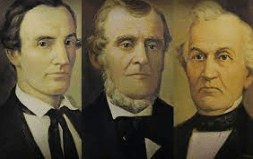
The 3 Witnesses – Can We Trust Their Testimonies?

I was talking with some LDS missionaries on my back porch as we were finishing up dinner. I said something along the lines of, “I want to follow the evidence wherever it leads.” Then one of them challenged me and asked, “Well what evidence is there for the atonement?” I generally listed off a few pieces of evidence relating to the death and resurrection of Jesus, one of the pieces being the eyewitness testimonies of the disciples and them being willing to suffer for what they knew was true and saw with their own eyes. One of the missionaries laughed as he said, “Well that sounds familiar.” The claim he was making here is that the eyewitnesses of the resurrection were mocked and persecuted in a similar way as the eyewitnesses of the gold plates. This inspired me to take a closer look into this claim and see just how similar these two groups really are. Their were 3 specific witnesses who worked more closely with Joseph Smith, similar to Peter, James and John being in the “inner circle” of Jesus’ ministry.

According to LDS Church history, Smith already had possession the gold plates in his house when the first 3 witnesses “saw” the gold plates. But instead of leading them inside to see the gold plates, Smith chose to lead them into the woods to somehow show them the gold plates there. It’s described in The History of the Church 1:55 that Smith, Cowdry, Whitmer and Harris went into the woods to pray. Cowdry and Whitmer both saw an angel holding the gold plates, but Martin Harris had a “lack of faith” which was preventing him and oddly enough, was also preventing Smith from seeing the same vision. Harris leaves that area, then kneels down elsewhere and starts fervently praying. Smith finds Harris and only after this, the same vision then opened up to Smith and Harris. So the plates were not shown to all 3 of the witnesses at the same time as commonly believed. It is also important to note that this was a spiritual experience through prayer, not a physical one. And remember: Smith allegedly had the gold plates in his house the whole time and could have easily invited them in, lifted up the cloth to show them but chose not to for whatever reason.

Let’s examine the testimony of each of these men and decide if their testimonies are ones that should be trusted.

_____________________________________________________________________________________

#1 – David Whitmer

Summary:

  • He left the LDS Church because he received a revelation from God telling him to leave
  • He believed that Smith was intentionally changing God’s revelations
  • He received another revelation saying that the Mormons have polluted God’s name.
  • Admits that he did not physically see or touch the gold plates
  • He never returned to the LDS Church

Details:

David Whitmer left the church 8 years after it was established because he saw Smith changing divine doctrines. He believed that God had given the restored Church clear and true revelations. It concerned him when he saw the direction that Smith was taking the LDS Church as he started changing revelations as Whitmer states below:

“Some of the revelations as they now appear in the Book of Doctrine and Covenants have been changed and added to. Some of the changes being of the greatest importance as the meaning is entirely changed on some very important matters; as if the Lord had changed his mind a few years after he give the revelations…The revelations were printed in the Book of Commandments correctly! This I know,… Joseph and the church received it as being printed correctly. This I know. But in the winter of 1834, they saw that some of the revelations in the Book of Commandments had to be changed, because the heads of the church had gone too far, and had done things in which they had already gone ahead of some of the former revelations. So the book of ‘Doctrine and Covenants’ was printed in 1835, and some of the revelations changed and added to.” (Letter written by David Whitmer, published in the Saints’ Herald, February 5, 1887)

In 1838, Whitmer left the Mormon Church and claimed that God Himself told him to: “If you believe my testimony to the Book of Mormon; if you believe that God spake to us three witnesses by his own voice, than I tell you that in June, 1838, God spake to me again by his own voice from the heavens, and told me to ‘separate myself from among the Latter Day Saints, for as they sought to do unto me, so should it be done unto them.” (An Address To All Believers In Christ, by David Whitmer).

Other witnesses (part of the “eight”) who were still alive left the LDS Church during this time as well. Whitmer later gave a revelation in which the Lord told him that the Mormons have “polluted my name, and have done continually wickedness in my sight.”(The Ensign of Liberty, August 1849, pp. 101-4). This is incredibly similar to the first vision when God allegedly told Smith that, “All of the churches and their creeds are an abomination to me.” Was Whitmer attempting to copy and reproduce what Smith had previously done? In any case, there are two possibilities regarding Whitmer’s revelations that both leave Church members in a difficult position:

A. If his revelations truly are from God, then they demonstrate that Mormonism is false. After all, why would God command one of his followers to leave the true church?

B. If his revelations are false, then they demonstrate that David Whitmer gave either man-made or satanic revelations in the name of the Lord. And if this is the case, how can we trust his revelation of the Book of Mormon to be valid and trustworthy?

The LDS Church asks us to accept David Whitmer’s testimony to the Book of Mormon, but they reject different revelations from the exact same man stating that the LDS Church has “polluted” God’s name. This inconsistency is both concerning and confusing.

David Whitmer stated in the Saints Herald publication, “these hands handled the plates, these eyes saw the angel.’ Later on however, a leader in the church named Zenus Gurley interviewed Whitmer and asked him, ‘did you touch them (the gold plates)?’ David’s answer was, ‘We did not touch nor handle the plates.'”

John Murphy was another faithful latter day saint who also wrote about an interview he had with David Whitmer. Murphy asked Whitmer if his experience of the gold plates was similar to the experience as a quaker when they feel the spirit move or when a Methodist is having a happy experience. Whitmer’s response was, “Just so.” Meaning that “yes, my experience of the gold plates is just like when people of other religions have a spiritual experience.” It was a NOT physical experience where he literally saw and handled the gold plates.

Whitner went to his grave denying his testimony of Joseph Smith as a true prophet of God, but still affirmed his testimony of the book of Mormon. He never returned to the LDS Church, nor did he ever take back what he said about the LDS Church polluting God’s name and having done continually wickedness in His sight.

_____________________________________________________________________

#2 – Martin Harris

Summary:

  • Changed religion over a dozen times over his lifetime
  • Sold his farm for funds in order to publish the Book of Mormon
  • He was ex-communicated from the LDS Church
  • Joseph Smith condemns him, saying that Harris has given into all kinds of lying, abominations and other sins
  • Other leaders in the early church attest that Harris admitted that the testimony of the gold plates was false and never physically occurred
  • Harris later returned to the LDS Church before his death

Details:

Martin Harris was known for changing religions. Over his lifetime, he changed his religious affiliation 13 times. Prior to joining Joseph Smith and the Mormon Church, Harris was a Quaker, a Universalist, a Restorationist, a Baptist, a Presbyterian, and then a Latter Day Saint. This gives off the vibe of someone who is very insecure in their beliefs, easily gullible, and always changing their mind. After his excommunication in 1837, he changed his religion 8 more times and then finally converted back to the LDS Church.

After Harris joined the Strangites, the Mormon leaders stated of Harris’ new religious group, “A lying deceptive spirit attends them… they know that they are of their father, the devil.” Apparently, Harris was part of a lying and deceptive religious group which would greatly discredit the validity of his testimony.

At another point, Harris joined the Shakers who believed that “Christ has made his second appearance on earth in a chosen female known by the name of Anna Lee, and is to be acknowledged by us as our Blessed Mother in the work of redemption.”

Martin seemed to have a habit of hopping from one “prophet” to another and also claimed to have a great testimony of the Shakers being the most true religion. Phineas H. Young [Brigham Young’s brother] wrote a letter to Brigham Young stating: “Martin Harris is a firm believer in Shakerism, says his testimony is greater than it was of the Book of Mormon.”

In August 1838, Joseph Smith denounced Martin Harris as “so far beneath contempt that to notice him would be too great a sacrifice for a gentleman to make. The Church exerted some restraint on him, but now he has given loose to all kinds of abominations, lying, cheating, swindling, and all kinds of debauchery.” 

Martin Harris later testified that he did not see the plates literally with his physical eyes: He said he saw the plates with “the eyes of faith and not with the natural eyes”, that is, with spiritual eyes. He also stated, “I never saw the gold plates, only in a visionary or entranced state. …In about three days I went into the woods to pray that I might see the plates. While praying I passed into a state of entrancement, and in that state I saw the angel and the plates.” (John H. Gilbert interview, 1838)

Warren Parrish was an LDS leader, baptized by Prophet Brigham Young and also assisted Joseph Smith in translating the Book of Abraham. Parrish states, “Martin Harris has come out at last, and says he never saw the plates, from which the book purports to have been translated, except in vision; and he further says that any man who says he has seen them in any other way is a liar, Joseph not excepted.” (Letter From Warren Parrish, 1838)

Stephen Burnett was ordained an elder by John Whitmer and ordained a high priest by Oliver Cowdry. Burnett wrote a letter to Lyman E. Johnson in 1838 and makes mention of Martin Harris. In this letter, Burnett reported that Harris once told him: “he (Harris) had hefted the plates repeatedly in a box with only a tablecloth or a handkerchief over them, but he never saw them only as he saw a city through a mountain. And said that he never should have told that the testimony of the eight was false.”

Burnett went on to say, “I am well satisfied for myself that if the witnesses whose names are attached to the Book of Mormon never saw the plates as Martin admits that there can be nothing brought to prove that any such thing ever existed.”

Although Martin Harris changed his mind about religion many times, when he was eighty-eight years old, he did ultimately return to the Mormon Church in Salt Lake City.

#3 – Oliver Cowdry

Summary:

  • Was one of Smith’s scribes who wrote the translated Book of Mormon
  • Accused Joseph Smith having an affair with 17 year old housemaid, Fanny Alger
  • Smith ex-communicated Cowdry, calling him a thief, liar and scoundrel of the deepest degree
  • Cowdry is ashamed of his former connection with Mormonism
  • Rejoined the LDS Church before his death
  • Still rejected much of the Doctrines & Covenants that came from Joseph Smith and viewed him as a fallen prophet

Details:

Oliver Cowdery was sometimes referred to as the Second President because of how much influence he had in the LDS Church. He worked very closely together with Joseph Smith and was a scribe for the BOM.

He was one of the first people to become aware of Smith’s relationship with Fanny Alger (17 year old house maid living with Joseph and Emma), which he called a “dirty, nasty, filthy affair.” Smith responded by calling Cowdry a “a thief, liar, perjurer, counterfeiter, adulterer and leader of scoundrels of the deepest degree.” Fanny Alger was later accepted as being Smith’s first plural wife. This leaves us with the impression that Cowdry may have been speaking the truth and Smith was trying to cover it up by throwing Cowdry under the bus.

Because Cowdry called out Smith for his alleged affair with Fanny, this was the primary reason that led to his excommunication. Cowdry then became a member of a Methodist Protestant Church. At this time, he “admitted his error and implored forgiveness, and said he was sorry and ashamed of his connection with Mormonism.” (Affidavit of G. J. Keen, 14 April 1885, in Charles A. Shook, The True Origin of the Book of Mormon (Cincinnati, OH: Standard, 1914), 58-59.)

There is evidence to suggest that for a time, that he even denied the Book of Mormon. Here is written in a poem in the “Times and Seasons – Mormon publication, pg 482”

“Or prove that Christ was not the Lord Because that Peter cursed and swore? Or Book of Mormon not his word Because denied, by Oliver? Or prove, that Joseph Smith is false Because apostates say tis so?”

After Joseph Smith’s death, Oliver Cowdery was rebaptized into the Mormon Church. David Whitmer, however, maintained that Cowdery died believing Joseph Smith was a fallen prophet and also believed that Smith’s revelations in the Doctrine and Covenants must be rejected:

“I did not say that Oliver Cowdery and John Whitmer had not endorsed the Doctrine and Covenants in 1836. They did endorse it in 1836; I stated that they “came out of their errors (discarded the Doctrine and Covenants), repented of them, and died believing as I do to-day,”…Now, in 1849 the Lord saw fit to manifest unto John Whitmer, Oliver Cowdery and myself nearly all the remaining errors in doctrine into which we had been led by the heads of the old church. We were shown that the Book of Doctrine and Covenants contained many doctrines of error, and that it must be laid aside;.” (An Address to Believers in The Book of Mormon, 1887, p. 1-2)

This is a very big statement considering that Joseph Smith was the author of the vast majority of revelations and doctrines that are contained in the Doctrines and Covenants. That last quote is important as we see that David Whitmer, John Whitmer and Oliver Cowdry all rejected the D&C and ended up losing faith in Joseph Smith as well.

 ____________________________________________________________________

Additionally, on December 16th, 1838 after a number of the 11 witnesses left the LDS Church, Joseph Smith made known his disgust for them when he stated that “John Whitmer, David Whitmer, Oliver Cowdry, Martin Harris are too mean to mention and we liked to have forgotten them.” (History of the Church, vol. 3:232)

The Mormon Church also classified both David Whitmer and Oliver Cowdry as “a gang of counterfeiters, thieves, liars and blacklegs of the deepest dye to deceive, cheat, and defraud the saints out of their property, by every act and stratagem which wickedness could invent, using the influence of the vilest.” (Senate Document 189, Feb. 15, 1841, 6-9)

To put it simply: with witnesses like these, who needs enemies?

Is it wise for us to trust the testimonies of these kinds of witnesses who the founding prophet has labeled as being liars and thieves? Not to mention that Martin Harris sold his farm in order to raise funds to publish 5,000 copies of the Book of Mormon. If anyone had a financial motive to lie and make sure that this book succeeded, it was Harris. All 3 of these primary witnesses were excommunicated from the LDS Church. At one point or another, all 3 denied the truthfulness of the LDS Church and converted to other religions. While, 2 of the 3 witnesses later returned to the LDS Church prior to their death, 2 of the 3 also believed Joseph Smith to be a fallen prophet.

Imagine Peter, James and John having these kinds of testimonies. You would be right to have questions and doubts if these people were some of your primary witnesses as the credibility of their testimonies are severely lacking. Thankfully, the apostles of Christ never waivered on their testimony that they physically saw the risen Christ. After the resurrection, they never left Christ, never doubted Christ, and never changed their testimony of what they saw. It wasn’t a visionary experience…it actually happened in reality. To learn more about the other group of 8 witnesses, check out the article: The 8 Witnesses: Can We Trust Their Testimonies?” (https://jllds.org/2023/12/22/the-8-witnesses-can-we-trust-their-testimonies/)

______________________________________________________________________

Invitation for you: Get a Bible that has the words of Jesus written in red. Read all of the red letters and trust the words of Jesus.

For physical evidence that supports why we can trust the Bible as a historical document, check out this article: https://jllds.org/2023/12/22/geographic-evidence-the-bible-vs-the-book-of-mormon/

Please let me know your thoughts, things you appreciated or things that you disagreed with in the comment section below. Thank you for reading and God bless!


It’s Easter, so we should sing “Praise to ‘which’ Man”?

Palm Sunday, Good Friday, & Easter Sunday. The whole week is dedicated to remembering the atoning sacrifice of Jesus. He is the only man who deserves our praise because He alone paid the price for our sins and lived the perfect life on your behalf because he knew that you would miserably fail. But our worship and praises to Christ shouldn’t just be around this time of year. We should be worshipping Jesus all year round. We see this being displayed in the gospel accounts all through the Savior’s life:

The wisemen – Matthew 2:11 “And going into the house, they saw the child with Mary his mother, and they fell down and worshiped him.”

The disciples – Matthew 14:33 “And those in the boat worshiped him, saying, “Truly you are the Son of God.”

The healed blindman – John 9:38 “Then the man said, “Lord, I believe,” and he worshiped him (Jesus).”

Mary and the other women – Matthew 28:9 “And behold, Jesus met them and said, “Greetings!” And they came up and took hold of his feet and worshiped him.”

The angels – Hebrews 1:6 “He (the Father) says “Let all God’s angels worship him (Jesus).”

Jesus constantly received worship in the past, he continually is receiving worship today, and will eternally receive worship in the future. Yet in Luke 4:8, we read: “Jesus answered, “It is written: ‘Worship the Lord your God and serve him only.”

If we are only supposed to worship God, as Jesus stated…why doesn’t Jesus ever rebuke anyone for worshipping Him? Why didn’t he ever say, “Stop worshipping me. It is only right for you to worship God!” Instead, we see him accepting all of these instances of worship.

  • Revelation 5:13-14 “Then I heard every creature in heaven and on earth and under the earth and on the sea, and all that is in them, saying: “To him who sits on the throne and to the Lamb be praise and honor and glory and power, for ever and ever!” The four living creatures said, “Amen,” and the elders fell down and worshiped.”

Here we read that at some point in the future, every single creature will worship both the one who sits on the throne and the lamb. This is referring to the Father and the Son. They will both be worshipped equally. Keeping in mind that only God alone should be worshipped, this only makes sense if both the Father and the Son are equally God…different persons of the same God. (For a more detailed explanation of the Trinity, check out this article: Is The Trinity Biblical or Manmade? https://jllds.org/2023/12/15/is-the-trinity-biblical-or-man-made/

But the LDS Church leaders and Scriptures teach that the Father deserves a much higher level of worship than Jesus:

D&C 20:19 “And gave unto them commandments that they should love and serve him, the only living and true God, and that he should be the only being whom they should worship.”

  • This verse is referring to God the Father, which is why apostle Bruce R McConkie stated, “We worship the Father and him only and no one else. We do not worship the Son and we do not worship the Holy Ghost…Worship in the true and saving sense is reserved for God the first, the Creator.”

Beginning with the doctrine that Jesus is just our elder spirit brother who we can eventually become just like, I can see where they are coming from. But this is a very incorrect starting point and assumption. In the Bible, we read that even God the Father addresses Jesus as His God and Lord:

Hebrews 1:8-11 “But about the Son he (the Father) says, “Your throne, O God, will last for ever and ever; a scepter of justice will be the scepter of your kingdom…He (the Father) also says, “In the beginning, Lord, you laid the foundations of the earth, and the heavens are the work of your hands. They will perish, but you remain;”

Throughout the Bible, we see how Jesus and the Father both address each other as God. Yet they also both agree that it is God alone who should be praised and worshipped. How can this be? Because they are both the same God…the 1 and only God who has ever existed and ever will exist. This is why praises are equally due to both the Father and the Son:

Psalm 150:6 “Let everything that has breath praise the Lord. Praise the Lord.”

Psalm 117:1-2 ““Praise the Lord, all nations! Extol him, all peoples! For great is his steadfast love toward us, and the faithfulness of the Lord endures forever. Praise the Lord!”

If any religion or church sings praises to any man other than Jesus Christ, that is an obvious sign that you should get out of there ASAP. Unfortunately, this is exactly what we have seen in the LDS Church.

During their time of worship and singing praises to God, they will occasionally sing a song called: “Praise to the Man.” What man are they singing praises to? It’s not Jesus. Sadly, they are singing praises in their church buildings to Joseph Smith. Below are some of the lyrics to this hymn:

Praise to the man who communed with Jehovah…Kings shall extol him, the nations revere.”

“Praise to his mem’ry, he died as a martyr; Honored and blest be his ever great name! Long shall his blood, which was shed by assassins, Plead unto heav’n while the earth lauds his fame.”

  • Praising the “great name” of Joseph Smith. There is only one great name that deserves this kind of praise. Philippians 2:10 “So that at the name of Jesus every knee should bow, in heaven and on earth and under the earth,”

“Hail to the Prophet, ascended to heaven…Death cannot conquer the hero again.”

  • There is only one hero who should ever be sung about and praised in church: Jesus.

“Great is his glory and endless his priesthood. Ever and ever the keys he will hold.”

  • This song attributes an endless priesthood to Joseph Smith while God’s Word attributes an endless priesthood only to one man: Christ alone. Hebrews 7:24 “because Jesus lives forever, he has a permanent priesthood.”

“Earth must atone for the blood of that man…Millions shall know ‘Brother Joseph’ again.”

  • There is only the blood of one man that should ever be mentioned in a song of praise: the precious blood of Christ.

___________________________________________________________

Latter Day Saints will often attempt to downplay this song by saying, “We don’t worship Joseph Smith. This is just our way of honoring and revering him.” Here is the thing: the name of this song is, “Praise to the Man.” Latter Day Saints are literally singing praises to Joseph Smith when Jesus is the only man who rightfully deserves our praise. Below are a few songs by Christian artists that sing praises of Jesus that I encourage you to look up, listen to, and meditate on:

Your Great Name – Natalie Grant

Lost are saved, find their way, at the sound of Your great name
All condemned, feel no shame, at the sound of Your great name
Jesus, worthy is the lamb that was slain for us, son of God and man
You are high and lifted up, that all the world will praise Your great name

My Living Hope – Phil Wickman (my personal favorite)

Hallelujah, praise the one who set me free. Hallelujah, death has lost its grip on me
You have broken every chain. There’s salvation in your name. Jesus Christ, my living hope.

What Can Wash Away My Sin – Roberty Lowry

What can wash away my sin? Nothing but the blood of Jesus;
What can make me whole again? Nothing but the blood of Jesus.
Oh! precious is the flow That makes me white as snow;
No other fount I know, Nothing but the blood of Jesus.
Nothing can my sin erase – Nothing but the blood of Jesus!
Naught of works, ’tis all of grace — Nothing but the blood of Jesus!
This is all my hope and peace — Nothing but the blood of Jesus!
This is all my righteousness — Nothing but the blood of Jesus!

Hero – Abandon (perfect song for Easter)
His touch could heal the sick, but He was called a hypocrite
Laid behind the stone, his death was shortly mourned, He left the curtain torn
There He goes, a hero, a savior to the world, Here He stands with scars in His hands
With love He gave His life so we could be free, The savior of the world
He chose to take the cross, shed tears for the lost
The broken and the needy, forgiving those who were and will be

____________________________________________________________

This Easter, I pray that just one Latter Day Saint will wake up to how blasphemously sinful “Praise To The Man” is and never utter the words of that hymn again. If you are a Latter Day Saint, I invite you to repent, never sing this song again, and leave it at the foot of the cross where you can find peace and forgiveness for every single sin in your life. (To learn more about what it means to know Jesus as your personal mediator, check out this article: Who is Your Personal Mediator? Who Is Your Personal Mediator? – JLLDS Ministries)

Let this be the day when you decide to make a personal covenant with God, promising to never sing praises to another man other than the one who gave His life for you: the great God and savior, Jesus Christ.

Do We Still Need A Temple Today?

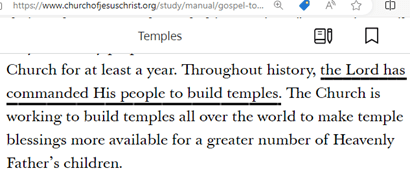
In the Old Testament, we read about the temple being a place of worship for the Israelites. The temple is intended to be a place where Latter Day Saints go to feel a stronger presence of the Lord and make higher level covenants with Him. Making these special covenants is required if someone desires to progress on their path and qualify for eternal life and live with God in heaven. There are over 300 LDS temples that have been built all around the world. A curious question we can ask is: How many temples were there in the Old Testament?

Is it true that God commanded the Israelites to build “temples?” The first temple was built by king Solomon. That temple was destroyed by the Babylonians, then God commanded Ezra to rebuild the temple and those were the only two times when God commanded people in the Old Testament to build a temple. There literally were only two temples that were built throughout the entire history prior to Christ. But another question is: what goes on inside of the temple and where did some of the rituals originate from?

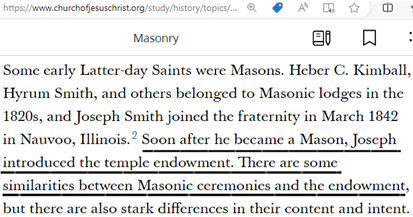
Joseph Smith joined the free masons, he learned their masonic rituals, then shortly after this he created the temple endowment ceremony which conveniently has a number of similar rituals as the masonic ceremony. What exactly are some of these similarities?

  1. Handgrips (token handshakes)
  2. Key Words (similar to a secret phrase one must recite in order to enter into the celestial room)
  3. Special clothing (white temple garments)

This realization that Smith copied rituals from free masonry and then put a religious twist on them has trouble many Latter Day Saints. The Free Masons were also into symbols, specifically the compass and the square. Below is a free mason building that is located near my house:

As you can see, the compass and the square symbols are on the building’s sign (with the G in the middle). These symbols are also used and considered sacred in the LDS Church.

Have the temple Ceremonies Remained The Same Over Time?

After Joseph Smith “restored” the temple endowment ceremony, rituals were eventually removed following Smith’s death. Prior to the 1990’s, members in the temple would be required to recite the following oath:

“We, and each of us, covenant and promise that we will not reveal any of the secrets of this, the first token of the Aaronic priesthood, with its accompanying name, sign or penalty. Should we do so, we agree that our throats be cut from ear to ear and our tongues torn out by their roots.”

Members mentioned how uncomfortable this made them feel. Seeking to prevent members from leaving, the LDS Church eventually removed this part of the endowment ceremony.

Up until 2019, women were required to “pledge obedience to their husbands” during the temple ceremony while their husbands “pledged obedience to God.” Women started to complain about this and said that they didn’t think this part of the ceremony was fair. Why are the woman pledging allegiance to men while the men are pledging obedience to God? Once again, the LDS Church edited this part in order to make the women happy and retain their members. Now, both genders pledge allegiance to God.

If Joseph Smith truly did restore the temple ceremonies to what they originally should have been, why do they keep changing? Is it right for the LDS Church to change God’s ordinances just because they want to make other people happy and to stop them from complaining?

A number of Latter Day Saints claim that masonic practices can be traced all the way back to Solomon’s temple. Yet throughout the entire Bible and the Book of Mormon, you don’t see any mention of spouses being sealed (temple marriages) nor do we read anything about token handgrips and special phrases you must memorize if you wish to enter into the celestial room. There is no evidence to suggest that Moses, Solomon or any other prophet practiced these rituals. In fact, masonry wasn’t even invented until the 1,400’s and the LDS Church acknowledges this:

The best explanation is that the LDS Church as to offer is that free masonry was a catalyst or tool that God used to give Joseph Smith revelation to restore the temple ordinances to what they should be.

______________________________________________________________________

What did Jesus say on this matter in regard to the temple?

Matthew 12:6 “I tell you that something greater than the temple is here.”

Matthew 5:17 “Do not think that I have come to abolish the Law or the Prophets; I have not come to abolish them but to fulfill them.”

These verses along with others tell us that Jesus perfectly fulfilled all 613 laws of the Old Testament, and because of that, he is greater than the temple. The animal sacrifices in the temple were how our sins were atoned for under the old covenant. But the cross is how our sins are atoned for under the new covenant. In other words: JESUS IS THE NEW COVENANT. When it comes to eternal life (living in the presence of God in heaven), there is no need for temples because Jesus is enough.

_____________________________________________________________________________________

We read in Acts 17:24 “The God who made the world and everything in it is the Lord of heaven and earth and does not live in temples built by human hands.”

1 Corinthians 6:19 “Do you not know that your bodies are temples of the Holy Spirit, who is in you.”

We see that God doesn’t dwell inside of temples or any other building that was made on this earth. Furthermore, Christians today have the Holy Spirit dwelling inside of them. So under this new covenant of grace, our bodies are temples of God (the Holy Spirit). This would be another Biblical reason for why we no longer need physical temples today.

______________________________________________________________________

Revelation 21:22 I DID NOT SEE A TEMPLE in the city, because the Lord God Almighty and the LAMB ARE ITS TEMPLE.”

John 4:20-21 “Our ancestors worshiped on this mountain, but you Jews claim that the place where we must worship is in Jerusalem.” “Woman,” Jesus replied, “believe me, a time is coming when you will worship the Father neither on this mountain nor in Jerusalem.”

God’s Word clearly states that there will be no temple in Zion when God establishes the new heaven and the new earth. Jesus also told the Samaritan woman that there would be a time when we will worship God neither on the mountain nor in Jerusalem (where the temple was located). That time is began after Jesus died on the cross and the temple veil was torn from top to bottom.

_____________________________________________________________________

When the temple in Jerusalem was destroyed in 70 AD, the apostle John and his own disciples (Ignatius and Polycarp) were still alive. There is a reason why none of them weren’t franticly writing letters about the need to rebuild the temple. It’s because they realized that temples were under the old covenant and that Jesus is the new covenant and Jesus is enough. After Christ ascended back into heaven, the apostles still went to the temple for worship. The temple was traditional and convenient…but no longer necessary. Remember when Jesus prophesied that the temple would be destroyed? Why didn’t He follow that up with: “and make sure to rebuild it if you want to live with me in heaven.” He said that it was going to be destroyed and never said anything about the need to rebuild it.

Since the death and resurrection of Christ, we now have the cross that permanently atones for the sins of those who have fully trusted in Jesus as their Lord and savior apart from works. Receiving eternal life has nothing to do with saving ordinances because it is Jesus alone that saves. But according to LDS doctrine, temple works are required for us to qualify for eternal life and live with God in heaven. If the gospel was truly restored to what it once was, why are today’s temple ordinances so different than what was practiced by the prophets of the Old Testament? Yes, we read about the prophets in the OT and Jesus and his apostles in the NT going to the temple to worship…but why don’t we ever read about Jesus or the apostles doing any of the saving ordinances? It’s because none of them ever taught the LDS saving ordinances.

In 2 Corinthians 11:4, the apostle Paul warns us about following after a false Christ, accepting a false gospel, and listening to a false spirit. Any organization that professes the need for temples or the mandate to do temple works in order to receive eternal life and live with God forever in heaven is preaching a different gospel that is not the new covenant of grace. According to Galatians 1:6-9, it is a cursed gospel that can’t save anyone.

I pray that you would critically think about these things and ask yourself the following questions:

  1. Am I under the new covenant of grace that was taught by Jesus and his apostles?
  2. Or am I under a gospel of temple works?

Please let me know your thoughts, things you appreciated or things that you disagreed with in the comment section below. Thank you for reading and God bless!
Grace vs Grace

Beginning in September 2023, I started meeting with a Latter Day Saint at my work on my lunch breaks. We had a number of fruitful and enjoyable dialogues in the following months as well. He attended my church a few times during this period and one day said to me, “Paul, by everything I have experienced from you and your church, it sounds like our beliefs on grace are the same.” This inspired me to dig deeper into what precisely the LDS Church teaches on grace. Allow me to walk us through what I discovered.

  • The gift of grace is the enabling power from God the Father to help us live out the gospel of Jesus Christ. This gift of grace is also responsible for the resurrection and everyone being saved from spiritual death and instead are given the gift of immortality.
  • There apparently are different levels of God’s grace that are given to individuals. Everyone is a recipient of God’s grace…but if you want the fulness of God’s grace that will get you into his heavenly kingdom, then that burden rests on your own shoulders.
  • According to the LDS Church, the degree of grace which you are given completely depends on the degree of effort you have put forth. But let’s dig a little deeper. What exactly must one do if they wish to receive enough grace to enter into the presence of God?
  • We gain access to God’s grace by making covenants and receiving ordinances inside of the temple. It is also through these temple ordinances that one becomes “born again.” What exactly are some of these required ordinances that I must receive so that I can live with God forever in heaven?

__________________________________________________________________________________

  • At a minimum, you must get baptized, receive the priesthoods (for men), and also receive your endowments (go through the endowment ceremony). But there are also pre-requisites that one must first perform in order to become “worthy” to enter into the temple. In order to be declared worthy to enter into the temple and progress along the path that leads to eternal life, you must meet with your bishop and go through a temple recommend interview. Below are just a few of the questions the bishop will ask:
  • If you do not give 10% of your financial earnings and you say, “no” it’s not big deal because the bishop will then ask a follow up question: “Would you like to make a tithing settlement?” This has recently been changed to the more positive wording of, “tithing declaration.” At this point, if you say “sorry, I can’t afford to give that much money to the Mormon Church,” then you will not be worthy to enter the temple and make the required higher-level covenants. All of your progress towards eternal life will come to a complete halt until you choose to pay the 10% to the LDS Church.
  • If you are not consistently wearing your sacred undergarments, you are not keeping one of your temple covenants and are therefore not worthy to enter into the temple.
  • This is a big dividing line. Bible based Christians know they we are sinful human beings, guilty of breaking God’s law on a daily basis (whether we realize it or not), and are therefore unworthy. Whereas the vast majority of Latter Day Saints will answer “yes” to this question. On the basis of what? Outward actions such as tithing, consistently wearing their garments, and keeping the laws and ordinances. When boiled down, whether or not someone is worthy to enter the temple and progress towards eternal life is based individual efforts and works. This is neatly summed up in the 3rd Article of Faith:
  • “We believe that through the Atonement of Christ, all mankind may be saved, by obedience to the laws and ordinances of the Gospel.

Keep in mind that making covenants and ordinances are the things we must do if we want to be given access to God’s grace and become born again.

  • Our eternal life and the degree of grace that we receive is critically based on works/the things we must do. Ultimately, your status of your eternal life rests in no one else’s hands but your own. This makes sense in light of the statement that Dallin Oaks made at a general conference in 2003 (Repentance and Change) when he said, “The plan of the Father and the Savior is based on individual choice and individual effort.” Later, he also states, “The gospel plan is based on individual responsibility.”

_____________________________________________________________________________________

What Does The Bible say About Grace?

Romans 5:1-2 “Therefore, since we have been justified through faith, we have peace with God through our Lord Jesus Christ, through whom we have gained access by faith into this grace in which we now stand.”

  • Access into God’s grace is by a genuine and sincere faith/trust in Christ. It has nothing to do with works or ordinances we must perform. Grace will result in good works and giving God our best efforts. But the LDS Church has reversed this in stating that the more effort you put forth and the more covenants you make, the more grace you will receive. This is not so.

Romans 11:5-6 “So too, at the present time there is a remnant chosen by grace. And if by grace, then it cannot be based on works; if it were, grace would no longer be grace.”

  • You have to make a choice of which gospel you are claiming to be under: the gospel of grace or a gospel of works. It cannot be both because if even one little work is required, it can no longer be categorized as grace. The precise thing that makes grace what it is, is the fact that it is given freely and apart from any works. Grace is something that is completely undeserved and not dependent on anyone’s effort. It is something you fully receive when you are completely unqualified to receive it. That is how loving and compassionate this God of the Bible is.

Romans 3:24 “All are justified freely by his grace through the redemption that came by Christ Jesus.”

  • Grace is indeed an enabling power to do what is right. But it is so much more than that. It is grace alone that justifies us before God on judgement day. Grace is the only thing that qualifies us for eternal life and entering into his presence. Because according to Romans 6:23, eternal life is a free gift! That’s what makes eternal another example of grace, rather than something you have to work/progress towards.
  • What does it mean to be justified? It means to be fully pardoned of all the wrong that you have done. While being justified and being forgiven are two different terms, they happen simultaneously and their end result is identical. When someone sincerely places their faith in Jesus, they are immediately both justified and forgiven of all their sins. One definition of forgiveness I’ve heard is: “when God removes everything that keeps you from enjoying Him completely.” When one is justified, another gift that a person is immediately given the assurance of living in the presence of God after this temporary life is over. It by grace alone through faith alone in Christ alone that has justified me and has given me that peace and joy of knowing that my eternal life is securely in His hands and sealed by the Spirit, no matter what. Good works and obedience are simply the evidence demonstrating that I have truly been justified. But works do not play any role in how one is justified or how much grace one is due.

Ephesians 2:8-9 “For it is by grace you have been saved, through faith—and this is not from yourselves, it is the gift of God— not by works.”

  • Only those who have faith will be saved. How do they become saved? By obedience to the law and ordinances/works? By our own efforts + God’s grace? Or by grace alone?

Titus 3:3-7 “But when the kindness and love of God our Savior appeared, he saved us, not because of righteous things we had done, but because of his mercy. He saved us through the washing of rebirth and renewal by the Holy Spirit, whom he poured out on us generously through Jesus Christ our Savior, so that, having been justified by his grace, we might become heirs having the hope of eternal life.”

  • Do our righteous deeds and personal obedience play any role in our salvation, eternal life and justification? No! We are justified and saved from hell by grace alone. Contrast this with Alma 5:35 “Yea, come unto me and bring forth works of righteousness, and ye shall not be hewn down and cast into the fire.”

    According to this passage in the Book of Mormon, our righteous works play a crucial role is saving us from the fire of hell. But according to the teachings of Jesus and his apostles, we are saved from hell fire when we are justified by God’s grace which is not given on the basis of works, covenants or ordinances. Having faith and trust in God’s grace alone is sufficient for your eternal life! This is what truly makes it “amazing grace.”

_______________________________________________________________________________________________

How are you seeking to be justified and receive eternal life?

By grace through faith?                   Or                 By grace through works?

For a better understanding on the differences between the LDS gospel and the gospel that was taught by Jesus and his apostles, please check out my other article, “Which Gospel Are You Under?”

https://jllds.org/2024/01/12/which-gospel-are-you-under/

Please let me know your thoughts, things you appreciated or things that you disagreed with in the comment section below. Thank you for reading and God bless!
Which God Is More Forgiving?

When I open God’s Word and read, I take so much comfort in knowing how forgiving, merciful and full of grace God truly is. Jeffrey Holland once said at general conference (Title: We Are All Enlisted), “Whoever you are and whatever you have done, you can be forgiven.” This indeed is the God that we read about in the Bible. But the question now becomes: is this true for all people according to LDS doctrine? Is elder Holland referring to everyone or speaking in a general sense to most people? Let’s take a closer look at some specific sins and verify if God truly does forgive all sins.

Note:  Murder is unforgivable only if the person has already received the gift of the Holy Ghost and has divine “light and knowledge” being fully aware of what is right and wrong as king David was. If someone in this position murders someone else, they will have no choice but to live in the lowest heavenly kingdom and will never be able to live in the presence of God or with their families.

_________________________________________________________

D&C 42:18 “And now, behold, I speak unto the church. Thou shalt not kill; and he that kills shall not have forgiveness in this world, nor in the world to come.

– King David is someone who made a big mistake and chose to commit murder. LDS doctrine states that this is why he will never be forgiven of that sin and fell from his exaltation, losing his eternal life forever. He is currently in the telestial kingdom and has no hope of ever living in God presence in heaven or with his family.

– LDS Prophets have confirmed multiple times that murder is an unforgiveable sin. Not just murder of adults. This would include murder of babies as well (abortion). But murder is not the only sin that God won’t forgive:

D&C 42:25-26 “But he that has committed adultery and repents with all his heart, and forsaketh it, and doeth it no more, thou shalt forgive; But if he doeth it again, he shall not be forgiven, but shall be cast out.”

  • Regarding one who has the similar level of spiritual “light and knowledge” as king David: If they commit adultery once and repent by never doing it again, they will be forgiven. But if they commit adultery again at a later point in time, God will never forgive them even if you are sincerely repentant and are filled with regret. What is done has been done and there is no way to undo it. According to the LDS Church, there a couple sinful lines that you simply cannot cross…and if you do, you are eternally disqualified from living with God and your forever family. What if at some point down the road after you have received “light and knowledge,” you have a moment of weakness and make a serious mistake like David? That sounds stressful if you haven’t committed these sins and hopeless if you have.

Below is a quote from President Joseph Fielding Smith related to forgiveness for the most grievous sins and how they cannot be covered by the blood of Christ:

  • “Man may commit certain grievous sins—according to his light and knowledge—that will place him beyond the reach of the atoning blood of Christ. If then he would be saved, he must make sacrifice of his own life to atone—so far as his power lies—for that sin, for the blood of Christ alone under certain circumstances will not avail. Joseph Smith taught that there were certain sins so grievous that man may commit, that they will place the transgressors beyond the power of the atonement of Christ. If these offenses are committed, then the blood of Christ will not cleanse them from their sins even though they repent. Therefore their only hope is to have their own blood shed to atone, as far as possible, in their behalf.” (Doctrines of Salvation, vol. 1, pp. 133-138.)

This prophet is saying that if you have received God’s divine light and knowledge and are fully aware of your actions, yet still choose to commit a serious sin (murder), then the blood of Christ is not enough to atone for your sins, even if you sincerely repent. The blood of Christ is not strong enough. Your only hope of being forgiven of these serious sins might occur if you voluntarily lay down your own life in addition to Christ laying down his. Field Smith wasn’t the only prophet who taught this. Prophet Brigham Young had some things to say as well:

  • “There are sins that men commit for which they cannot receive forgiveness in this world, or in that which is to come, and if they had their eyes open to see their true condition, they would be perfectly willing to have their blood spilt upon the ground, that the smoke thereof might ascend to heaven as an offering for their sins; and the smoking incense would atone for their sins…And further more, I know that there are transgressors, who, if they knew themselves, and the only condition upon which they can obtain forgiveness, would beg of their brethren to shed their blood, that the smoke thereof might ascend to God as an offering to appease the wrath that is kindled against them, and that the law might have its course. I will say further; I have had men come to me and offer their lives to atone for their sins.” (Journal of Discourses 4:53-54)

Since this time, there have been more recent LDS leaders (Bruce McConkie) who have denounced the doctrine of “blood atonement” for serious sins, stating that, yes it may or may not have something that was practiced during the time of Moses, but it has never been practiced or taught by the LDS Church. For one, we know that it was taught for a time, but as to whether or not it was actually practiced, we can’t say for sure one way or the other. However, the last sentence of Brigham Young’s quote above seems to allude to the practice of this doctrine. In any case, what has been formerly taught by LDS prophets is there and it always will be part of LDS history. At least for a time, it was a doctrine that was proclaimed by prophets of God and must be taken into consideration. Were some of the prophets in the past wrong about the doctrine of God’s forgiveness for the most grievous sins? If the doctrine they are teaching is not true, then it is false. But if this is the case, might they or the current leaders be wrong about other essential doctrines today as well? It can be a very slippery slope and leaves us with the question of: What is the point of having a prophet if they can be (and have been) so wrong on many essential things related to God and the gospel?

After taking these things into account, there are a couple options that we are left with:

  1. Regarding those who have received the divine light and knowledge as king David had but still made the mistake of committing a serious sin: God willingly chooses to withhold his grace and forgiveness from them even if they return to Him and sincerely repent with all their heart.

    OR
  2. God would forgive these people if He could, but unfortunately the blood of Christ just is not strong enough to cover the most serious of sins and God can’t forgive them.

________________________________________________

Below is a Psalm that David wrote after he committed this terrible sin of murder and adultery:

Psalm 51:1-4 “Have mercy on me, O God, according to your unfailing love; according to your great compassion blot out my transgressions.Wash away all my iniquity and cleanse me from my sin. For I know my transgressions, and my sin is always before me. Against you, you only, have I sinned and done what is evil in your sight; so you are right in your verdict and justified when you judge.”

  • We can see how heartbroken and repentant David is for the terrible sins that he committed. His was blinded by his sin and knows that he made some HUGE mistakes. In this passage, we see that he is desperately seeking forgiveness from God. This desire and hunger for God is one of the reasons why he is the only person in history whom God has ever called, “a man after my own heart” (Acts 13:22). But according to the LDS Church, God basically looked at David and said, “Yes David, I know that you are truly sorry. Yes, I know that you are a man after my own heart. And yes, I do have the power to forgive your all of your sins, including murder…but I am NOT going to. And because of my decision to not forgive your sin, you will never be able to live my presence or in the presence of you family.” David wanted nothing more than to be with God. Isn’t it ironic God called David “a man after my own heart,” yet David will spend eternity being separated from God? Is this really the same God of love, mercy and grace that we read about in the Bible?

____________________________________________________________

Below is a verse that took place shortly after David murdered Uriah the Hittite:

2 Samuel 12:13 “Then David said to Nathan, “I have sinned against the Lord.” Nathan replied, “The Lord has taken away your sin. You are not going to die.”

  • According to God’s Word, the God of the Bible actually DID forgive David of his terrible sin of murder!

_____________________________________________________________

1 John 1:9 “If we confess our sins, he is faithful and just to forgive us our sins, and to cleanse us from all unrighteousness.”

  • If we repent in our hearts and sincerely confess our sin to God, He will forgive us of ALL our sins, regardless of how big or small they are. Because David repented and sincerely confessed his sins to God, doesn’t that mean that he was forgiven of ALL his sins as well?
  • Imagine that you found yourself faced with the heart wrenching decision of whether or not to abort your child that was conceived out of wedlock. To kill your unborn child or to maintain your good standing with friends and family. Suppose that you had a moment of weakness and went through with the abortion, fully knowing it was wrong. Following that decision, how crushed and depressed would you feel knowing that you are guilty of murder and will never be forgiven of that sin?
  • Or imagine that you had a moment of weakness and committed adultery once and repented. Then you found yourself in the same situation and committed adultery a second time. In all of your sorrow, you turn to God and cry out with a truly repentant heart, begging God for His forgiveness…yet according to the LDS Church, you are now hopelessly faced with the realization that you will never dwell in the presence of God or any of your family members.

Colossians 1:13-14 “Who hath delivered us from the power of darkness, and hath translated us into the kingdom of his dear Son: In whom we have redemption through his blood, even the forgiveness of sins.”

  • According to God’s Word, is the forgiveness of my personal sins achieved in the blood and sacrifice of Jesus? Or partially by my own efforts, works, and ordinances?
  • Is the blood of Jesus strong enough to cover the sin of murder? Or was the brutal, agonizing, and life changing sacrifice of Christ insufficient and not strong enough to cover that sin?

______________________________________________________________

Is The LDS Gospel Good News For All?

This part of the LDS gospel teaches that a “man after God’s own heart” messed up big, he was temporarily blinded by his sin, and now has NO HOPE of ever living with God in heaven and will be forever separated from his family. And I know that David isn’t the only person who has ever made this kind of mistake. Put yourself in his shoes for a moment: Would feeling joy even be a possibility knowing that your family members are in presence of God while you are stuck in the telestial kingdom and eternally separated from them? That sounds like torment and outer darkness to me.

This is a not a gospel that is good news for all, but actually gospel of sadness and hopelessness for some. However, the gospel that I read about in the Bible is indeed good news for ALL PEOPLE who turn to God, regardless of any sin they have ever committed and regardless of however much “light and knowledge” they have previously received!

Luke 2:10-11 “But the angel said to them, “Do not be afraid. I bring you good news that will cause great joy for all the people. Today in the town of David a Savior has been born to you; he is the Messiah, the Lord.”

_____________________________________________________________

Anyone who sincerely confesses their sins to God, believes in the one true Jesus and turns their heart toward Him will be forgiven of ALL UNRIGHTEOUSNESS. Not only are their sinful burdens removed from their back, but they also receive the promise of eternal life, which is the absolute assurance of living in the presence of God.

1 John 5:13 “I write these things to you who believe in the name of the Son of God so that you may know that you have eternal life.”

  • This gospel just brings an indescribable amount of joy, comfort and peace! Regardless of how serious your sins are and how much “light and knowledge” you have received, it is never too late to repent, trust in Jesus, receive his full forgiveness and receive His free gift of eternal life. If king David was forgiven for his grievous sins, you can no doubt be forgiven as well.

_______________________________________________________________
Between the two gospels you just read about, which one is the “best news?”

Bible – A God who will always forgive the any and all sins of a repentant sinner

OR

LDS Church – A God who will NOT always forgive serious sins of a repentant sinner

Please let me know your thoughts, things you appreciated or things that you disagreed with in the comment section below. Thank you for reading and God bless!

To Fathers: Be A Positive Force

As the title alludes to, this message is directed towards fathers, but there are some aspects that can be applicable to mothers as well. I have only been a father for 10 years and my kids are still fairly young. So I am not in the least bit qualified to be giving any kind of parenting advice, but here is some wisdom that has been passed on to me that might be helpful reminders for other current fathers and it might be insightful for future fathers-to-be:

1. Demonstrate by your words and actions that you are sincerely devoted to God and madly in love with your wife. One of the things that will bring a child the most comfort and security is knowing that their mom and dad are committed to each other and not going anywhere.

      2. Say you are sorry to your kids: When you get upset and raise your voice too loudly, ask for their forgiveness. When you say something mean or in a condescending tone (this will happen at some point), demonstrate humility by letting them know that you have areas in your life that you are still working on and trying to improve at.

      3. “Put” your kids to bed, don’t “send” them to bed: Spend 5 minutes (or more) a night, just laying next to them in their bed every night. This is a good way to end the night on a personal and positive note with your child. Sometimes they will randomly ask you a serious question. As a parent, you can’t really plan for when those kinds of deep discussions are going to happen. While in bed, play with them. Wrestle with them. Tickle them. Give them back scratches. Draw letters on their back (see if they can guess the word you are spelling). Hug them. Kiss them goodnight (yes, dads…kiss your son also). Say, “I love you” every night. At a marriage conference my wife and I went to a decade ago, I still remember one of the speakers telling us, “My dad often told me he loved me, but still…I could never hear it enough.”

      4. This too shall pass: Being a parent is a great opportunity to grow in patience and grace. It is common having to repeat yourself and to be tested in these areas. “Please get your shoes on.” “Go brush your teeth.” “Remember to go potty if you need to go.” Over and over and over again. There was a time when one of my kids was in the potty-training phase. They were literally 5 feet away from the toilet…and decided that it was better to let the floodgates break loose in the hallway rather than taking 3 more steps into the bathroom and using the toilet as previously discussed 100 times. A good opportunity for me to build my patience, right?

      Another time was when I walked into the bathroom and saw one of my kids sitting on the toilet. I’m gonna be real…it looked like they had just finished an intense wrestling match with a big #2. I can certainly say that in all my life, I have never seen a human being or a toilet covered in so much poop. But guess what? “This too shall pass.” They are going to grow out of this phase in due time. It’s common for our living room to be a mess. For stuffed animals to be in hallway. To step on Legos in bare feet. To get into my bed to find a plastic toy lodged under my back. But in a really weird way, I am going to miss the messes. I’ve come to realize that you can take joy in cleaning up after your kids (not to the point of spoiling them). Because if you’re cleaning up their messes…that means that you still have the joy of them currently being in your presence.

      5. Piggy-backing off of the previous point, one of my favorite quotes of all time is from the Robbin Williams’ movie, “Hook.” Williams (Peter Pan in the movie) is a father who is a work-a-holic and has just missed his son’s baseball game after promising that he was going to be there to cheer his son on. Instead, he got held up in a work meeting. His wife has the wisdom to inform him of the reality of the situation as she gently says,

      • “Your children love you. They want to play with you. How long do you think that lasts? Soon Jack (son) may not even want you to come to his games. We have a few special years with our children, when they’re the ones that want us around. After that, you’re going to be running after them for a bit of attention. It’s so fast, Peter. It’s a few years, then it’s over. And you are not being careful. And you are missing it.”In the past, there were times when my oldest son would come into our bedroom at 2 AM because he had a bad dream. He would come over on my side of the bed and hop in under the covers with me to be comforted. After five minutes, he would hop back out and return to his bed. Then a few hours later, my youngest son would call for me and want me to come into his bed for a few minutes (sometimes I wonder if they have a secret night schedule and are intentionally taking shifts to make sure that I am sleep deprived). It was a lightbulb moment from God that changed my perspective when He helped me realize that these “middle of the night cuddles” will only happen for a year or two with each kid…then they will never call for me ever again. I suddenly received a lot more patience and started viewing it as a blessing that they want me to comfort and cuddle with them. As weary as you might feel…as repetitive as it might seem…as inconvenient as it may be…try to appreciate every moment of these golden years while they last, because when they’re gone, they’re gone.

      6. 1-On-1 Time: Build a relationship with your child as early as possible. Try to find ways to do things just the two of you. It could be something simple: doughnut date, Jamba Juice run, a walk around the block, a drive to Home Depot, play at a nearby park, or breakfast at McDonalds. Just do something. My dad was an amazing example to me growing up. He was so intentional and tried every day to do something with me and my brothers. I remember during my summer years in high school, I would be at home and my dad’s work was about 10 minutes away. On his 30-minute lunch break, it was common for him to drive 10 minutes home, play a video game with me for 10 minutes, then drive 10 minutes back to work and eat at his desk. Here are a few things that have worked well for me and have really strengthened my relationship with each of my kids.

      • Camping: Once a year in the summer, I will use a day of paid vacation to go camping with each kid. The first night with one kid, swap kids the next day and then stay another night with my next kid.
      • Birthdays: On their birthday week, I take a half day off from work to hang out with them and do whatever they want. Some years we will go watch a movie they want to see. Other years, we will go roller skating. For my son, we will just stay home, eat pizza, and play video games and board games all day. I know that not every father has the opportunity to take days off from work in this manner, but if you can, it will send the message to your kids that, “You are more important than my job.” They will never forget these days.
      • Daddy-Daughter Dance: Look around online and try to find a place that does Valentines or Spring Daddy-Daughter Dance. You both will treasure those times for the rest of your lives.

      To all of the dads out there, I hope this was helpful. I encourage you to be the involved father and leader that God has called you to be. Thank you for reading and God bless!

      Was There Really A Great Apostasy?

      While there are a number of things that Bible based Christians and Latter Day Saints agree on, the foundational topic of the Great Apostasy is not one of them. Let’s examine both sides and see where we end up.

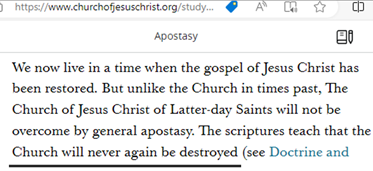
      The LDS article above states that the Church of Jesus will never again be destroyed. This implies that the Church of Jesus was destroyed at a previous point in time. And now that Joseph Smith restored the Church of Jesus Christ in 1830, it will never be destroyed again. When boiled down, the LDS Church is basically making the following claim:

      • “The church that Jesus built was destroyed…but the church that Joseph Smith built will last forever.”

      When put this way, it is very easy to see why Bible based Christians would view this claim to be so blasphemous.

      In the Old Testament times, God’s people had a historical cycle of rebelling against God, entering into apostasy, then another prophet would come along, get the people back on track by restoring the church and reestablishing priesthood authority. Joseph Smith permanently established God’s church on earth as it would never again be destroyed and fall into apostasy. This alleged accomplishment made Smith feel like he had reasons to brag which is why he stated:

      • “I have more to boast of than ever any man had. I am the only man that has ever been able to keep a whole church together since the days of Adam… Neither Paul, John, Peter, nor Jesus ever did it. I boast that no man ever did such work as I. The followers of Jesus ran away from Him; but the Latter-day Saints never ran away from me yet.” (History of the Church, 6:408–409)

      _________________________________________________________

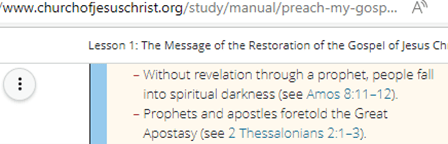
      When asking Latter Day Saints if there are any Biblical passages to support this idea that the church of Jesus was destroyed, there are two primary passages which they believe are prophecies about the Great Apostasy that was to come. Below is a screenshot from the missionary guide (Preach My Gospel) for the first lesson that they will typically teach investigators:

      Amos 8:11-12 “The days are coming,” declares the Sovereign Lord, “when I will send a famine through the land—not a famine of food or a thirst for water, but a famine of hearing the words of the Lord. 12 People will stagger from sea to sea and wander from north to east, searching for the word of the Lord, but they will not find it.”

      2 Thessalonians 2:3 “Let no man deceive you by any means: for that day shall not come, except there come a falling away first, and that man of sin be revealed, the son of perdition;”

      Are Amos 8:11-12 and 2 Thessalonians 2:1-3 truly referring to the Great Apostasy?

      When reading the Bible, we ought to study the context of the passage to make sure that we are being faithful interpreters of God’s Word. When striving to do this, it is important to read the previous verses and the following verses to make sure we have a good understanding of the surrounding context. Let’s take this approach and study these two passages to verify what they are talking about.

      ________________________________________________________

      2 Thessalonians 2:1 “Concerning the coming of our Lord Jesus Christ and our being gathered to him, we ask you, brothers and sisters,”

      • This beginning verse tells us that the contextual timeframe is in reference to the return of Jesus.

      2 Thessalonians 2:3-4 “Don’t let anyone deceive you in any way, for that day will not come until the rebellion occurs and the man of lawlessness is revealed, the man doomed to destruction. He will oppose and will exalt himself over everything that is called God or is worshiped, so that he sets himself up in God’s temple, proclaiming himself to be God.”

      • Christ will not return until the “rebellion” or “falling away” and the man of lawlessness/sin is revealed. These two events are directly connected because it will be the man of lawlessness who is leading the rebellion. That man is the anti-Christ.
      • Some posit that the man of lawlessness is Satan. However, we can be certain that this is not the case because in verse 9 we read that this man will be “in accordance with how Satan works.” The anti-Christ and Satan are two separate beings, and they are going to be a tag-team.

      This great rebellion/falling away will only happen AFTER the anti-Christ is revealed. That hasn’t happened yet. Since this anti-Christ figure has not yet been revealed, we can be certain that this great rebellion has not yet occurred either. Therefore, we can conclude that this passage in 2 Thessalonians cannot be referring to the Great Apostacy that allegedly took place after the death of the apostles in the following centuries.

      Clarification: Do I believe that an apostasy has ever taken place? Absolutely! It all began in the garden of Eden with Satan deceiving Eve and that same apostasy continues to this day. Apostasy can be defined as a deceptive action or a false belief. Even though there is apostasy and false teachings all around us today, that doesn’t mean that the Church of Jesus is absent today or was ever destroyed at a previous point in time. There has always been a general apostasy, but there has never been a complete apostasy. Rest assured that Christ is strong enough to protect his church, even in the midst of apostasy.

      ___________________________________________________________

      Amos 7:8-9 “And the Lord said unto me, Amos, what seest thou? And I said, “A plumbline.” Then said the Lord, Behold, I will set a plumbline in the midst of my people Israel: I will not again pass by them any more: And the high places of Isaac shall be desolate, and the sanctuaries of Israel shall be laid waste; and I will rise against the house of Jeroboam with the sword.”
       - Here in Amos chapter 7, we read that Amos has a vision and God tells Amos that he will not “pass by” the people of Israel any longer. God is going to bring judgement and destruction upon the house of Jeroboam, who was king of Northern Israel at this time. This is a specific prophecy of judgement on the Israelites and it continues into chapter 8:

      Amos 8:1-2 “This is what the Sovereign Lord showed me: a basket of ripe fruit. “What do you see, Amos?” he asked. “A basket of ripe fruit,” I answered. Then the Lord said to me, “The time is ripe for my people Israel; I will spare them no longer.”

      • God is once again proclaiming that the time is ripe for His judgement against the Israelites. This begs the question: why would God judge the Israelites? The end of the chapters gives us the answer.

      14 Those who swear by the sin of Samaria— who say, ‘As surely as your god lives, Dan,’ or, ‘As surely as the god of Beersheba lives’— they will fall, never to rise again.”

      • The end of verse 14 sums it up and helps us understand that the Israelites in Samaria were guilty of idol worship. This chapter describes what God’s judgement on the Samaritans is going to look like when it happens:

        – Verse 8: The land will tremble and everyone will be afraid
        – Verse 9: The days/times will be very dark and hopeless
        – Verse 10: It will be a time of mourning and sorrow
        – Verse 11: There will be a famine of hearing the words of the Lord
        – Verse 12: People will look for the word of the Lord but He will remain silent during this time because of their sin

      Amos chapters 7, 8 and 9 are all a prophetic warning of what is going to happen to the Israelites if they don’t repent and turn away from their idol worship. Then roughly, 15 years after Amos prophesied this, God used the Assyrians as his tool of judgement who destroyed Jerusalem and carried them off into exile.

      • Sequence of events:
        – 755 BC (roughly) – Amos was written
        – 740 BC – The Assyrians began attacking Northern Israel
        – 722 BC – The Assyrians captured Samaria

      Amos 8:11-12 is a specific prophecy about a specific group of people who God judged for a specific sin that they were unrepentant of. And we read the fulfilment of this prophecy in 2 Kings 17:5:

      “Then the king of Assyria came up throughout all the land, and went up to Samaria, and besieged it three years.”

      Once again, this passage is not referring to the LDS Great Apostasy that allegedly took place in the early Christian church.

      __________________________________________________________

      A quick example from the Jehovah’s Witnesses whose doctrine states that Jesus is not Jehovah of the Old Testament but is actually Michael the archangel. They start with this doctrine then go to passages like 1 Thessalonians 4:16

      “For the Lord himself will come down from heaven, with a loud command, with the voice of the archangel and with the trumpet call of God,”

      They will explain that Jesus has the voice of the archangel because he is the archangel. We can agree that their starting doctrines have caused them to misunderstand the Word of God in this instance. They doctrines have blinded them to what the Word of God truly says.

      Bringing it back to the Great Apostasy, Amos 8 and 2 Thessalonians 2. The LDS Church has also started with the doctrinal assumption that there was a Great Apostasy. Then going to these two Bible passages, taking them out of context and incorrectly using these passages to support their doctrine. This is backwards and not how we are to be faithful interpreters of God’s Word. We should never start with our doctrines and then twist God’s Word to make it line up with our doctrines. Instead, we need to start with God’s Word, then change our doctrines to make them line up with God’s Word. The reality is that there is no verse in the entire Bible that contextually references the event of the Great Apostasy.

      _______________________________________________________

      What Does God’s Word Tell Us About the Gospel and Church of Jesus?

      Matthew 16:18 “And I also say to you that you are Peter, and upon this rock I will build My church; and the gates of Hades will not overpower it.”

      • A common response is that the “rock” in this verse is talking about prophets and apostles. The point of this verse is to focus on the last half where Jesus states that nothing (not even the gates of hell) will overcome and destroy his church. But Joseph Smith taught that the devil did destroy Jesus’ church and that the fullness of gospel was lost.

      Jude 1:3 “Dear friends, although I was very eager to write to you about the salvation we share, I felt compelled to write and urge you to contend for the faith that was once for all entrusted to God’s holy people.”

      • This verse clearly states that the faith and gospel message would only be delivered once. If the gospel was truly delivered once and for all, then that eliminates the possibility of the gospel being delivered a second time. In other words, there will never be a restored gospel because the gospel of Jesus will always endure.
      • Many LDS would prefer the King James Version for this passage in Jude which says that “the faith which was once delivered unto the saints.” They will typically respond by saying, “My Bible doesn’t say ‘once for all.’ It only says, ‘once.’ I think this means that Jesus delivered the gospel once, and then after the great apostacy, Joseph Smith delivered it once again.”

      Which Version Is Right?

      Below is a Greek Bible that has the literal English wording above each Greek word.

      We can see here that the literal words used are “once for all.” The King James Bible is fantastic for its time, but modern Bibles today are easier to understand and also utilize the earliest manuscripts that were discovered after the KJV was written.

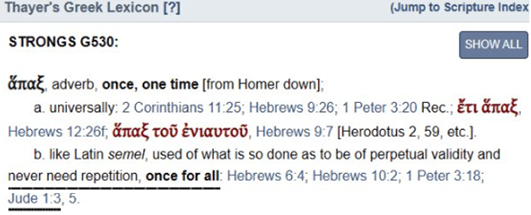
      Some serious/more scholarly Latter-Day Saints might push back and say that the Greek word in this passage is “Hapax,” which means “once.” And they aren’t wrong. Yes, “Hapax” can mean “once.” But it can also mean, “once for all” depending on the context. Below is a screenshot of the Strong’s concordance which breaks down each usage of “Hapax” in the Bible and splits them into two groups: passages where it contextually means, “once” and passages where it contextually means, “once for all.”

      As we can see, the correct usage of “Hapax” in Jude 1:3 is “once for all.”

      ___________________________________________________________

      According to God’s Word, how many times has the gospel been delivered to the saints?

      Do you believe that God is strong enough to protect his church from being destroyed?

      Taking free will and agency into consideration, do you believe that God is smart enough to figure out a way to protect his church from being destroyed?

      • If God is strong enough and smart enough to protect his church from being destroyed, why wouldn’t He protect it? The next time you open up a Bible, I invite you to put your doctrines on the shelf, read the New Testament without any LDS study guides/notes, and let the Word of God freely speak to you.

      Please let me know your thoughts, things you appreciated or things that you disagreed with in the comment section below. Thank you for reading and God bless!

      Who Is Jesus Really?

      2 Corinthians 11:4 “If someone comes to you and preaches a Jesus other than the Jesus we preached, or if you receive a different spirit from the Spirit you received, or a different gospel from the one you accepted, you put up with it easily enough.”

      • Just to be clear…the apostle Paul is not complimenting the Corinthians when he says this. Apparently, there is another version of Jesus that is being preached and Paul is warning them to be on guard.

      Who is Jesus according to the LDS Church? Their Church website says:

      According to the LDS Church, LDS prophets and LDS apostles, Jesus was the firstborn spirit child of heavenly Father and heavenly mother in pre-existence. Just like us, Jesus had a beginning and was brought into existence by another being. At a certain point in the pre-existent life, the intelligence of Jesus was organized and that is when the person of Jesus began to exist.

      Jesus was always sinless, but he was not always perfect, but became perfect AFTER his resurrection.

      Jesus became a God and reached His great state of understanding through consistent effort and continuous obedience to all the Gospel truths and universal laws. The Gospel of Jesus Christ teaches that God the Eternal Father is an exalted being…Mormon prophets have continuously taught the sublime truth that God the Eternal Father was once a mortal man who passed through a school of earth life similar to that through which we are now passing. He became God—an exalted being—through obedience to the same eternal Gospel truths that we are given opportunity today to obey.” – Milton R. Hunter (General Authority – Quorum of the Seventy).

      Christ worked out his own salvation by worshiping the Father. After the Firstborn of the Father, while yet a spirit being, had gained power and intelligence that made him like unto God.” – General Conference Bruce McConkie (General Authority – Apostle)

      Christ attained Godhood while yet in pre-existence, he too stood as a God to the other spirits” – Bruce McConkie (General Authority – Apostle)

      • The Jesus of the LDS Church was brought into existence and has not always existed. He worked out his own salvation and become one of many Gods through his own effort and obedience. He has not always been omnipotent and omniscient but gained power and intelligence as he progressed to godhood. And he is not the creator of all things. Remember: there are many other creator Gods out there who have created their own universe according to the LDS Church.

      _____________________________________________________________

      Psalm 90:2 “Before the mountains were born or you brought forth the whole world, from everlasting to everlasting you are God.”

      • Bible based Christians and Latter Day Saints both agree that Jesus is Jehovah of the Old Testament and that is who this verse is talking about. According to God’s Word/the truth, how long has Jesus been God for? From everlasting to everlasting. In other words, Jesus has always been God and has never been anything less than God.

      John 1:1-3 “In the beginning was the Word (Jesus), and the Word was with God, and the Word was God. The same was in the beginning with God. All things were made by him; and without him was not any thing made that was made.”

      • From the very beginning…not just from the beginning of our universe, but from literally forever ago and eternity past, Jesus has always been with God and has always existed as God. (This is a perfect passage that alludes to the Trinity. For more information on this topic, check out my Bible lesson, “Is The Trinity Biblical or Manmade?” https://jllds.org/2023/12/15/is-the-trinity-biblical-or-man-made/)
      • According to the truth, every single thing in every single universe and every single reality that has ever come into existence was created by who? That’s right…Jesus.

      Colossians 1:16-17 “For by him were all things created, that are in heaven, and that are in earth, visible and invisible, whether they be thrones, or dominions, or principalities, or powers: all things were created by him, and for him: And he is before all things, and by him all things consist.

      • According to God’s Word, was there anything (visible or invisible) in heaven or on earth that Jesus did not create? No! He literally created all things.
      • According to God’s Word, was there anything that existed before the person of Jesus? No! Jesus is God and God is the first being to ever exist.

      ____________________________________________________

      Is Jesus the Firstborn and Only Begotten Son of God?

      Many Latter Day Saints immediately respond with, “The Bible clearly calls Jesus the firstborn and the only begotten Son of God. Obviously, he can’t literally be the first being to ever exist as mainstream Christians claim.” But let’s dig deeper into these topics to better understand these two titles that are attributed to Jesus.

      The first question that might seem odd is: How many “firstborns” does God have?

      Exodus 4:22And thou shalt say unto Pharaoh, Thus saith the Lord, Israel is my son, even my firstborn:”

      Psalm 89:27 “Also I will make him my firstborn, higher than the kings of the earth.” (Verse 20 clarifies that this is referring to king David)

      Colossians 1:15 “Who is the image of the invisible God, the firstborn of every creature:”

      • Israel, David, and Jesus are all called God’s “firstborn.”

      What does “firstborn” mean in these passages?

      1. Israel – God’s special group of people whom he chose to be holy/set apart and that he promised to preserve. “Firstborn” here is in reference to rank or position. In the sight of God, the preservation of the Israelites is of greatest importance than any other people group because it would be through the bloodline of David (an Israelite) that the Messiah and savior of the world would come. If the Israelites were wiped out, God would have failed at keeping his promise. They are the only group of people that God covenanted with in the Old Testament. Therefore, protecting and preserving them was of the highest importance to God.
      • David – The last half of verse 27 helps us understand that “firstborn” is connected to David being the highest and most powerful king in the world. “Firstborn” here is also in clear reference to rank or position.
      • Jesus – In the same way, the following verses (Colossians 1:16-17) give us context to help us properly understand what “firstborn” is referring to: Jesus created absolutely ALL things and existed before absolutely ALL things. “Firstborn” for Jesus is also referring to rank and position. It is saying that Jesus is highest in rank and supremacy. This contextually makes sense: Jesus is supreme over every single thing that has ever come into existence because he is the one who cause all things to come into existence. The context clarifies that “firstborn” is not a reference to a chronological genealogy of Jesus being the literal firstborn or first birthed offspring of God the Father.

      _____________________________________________________

      What does “only begotten son” mean?

      Hebrews 11:17 “By faith Abraham, when he was tried, offered up Isaac: and he that had received the promises offered up his only begotten son,”

      The term “only begotten” can mean “to be first produced” as a literal offspring. But it can also mean, “unique” or “one of a kind.” Was Isaac literally Abraham’s only begotten son? No. Abraham had Ishmael before Isaac. He also had other sons after Isaac. In this passage we can see that the phrase, “only begotten son” is not to be interpreted in the literal sense. What then might it be referring to here?

      “Only begotten” in this passage means, “Unique” or “one of a kind.” Yes, Abraham did have more than one son, but Isaac was the only son he had by Sarah and Isaac is the son that God promised Abraham through His covenant. In this context, it makes sense for Isaac to be referred to as Abraham’s “only begotten son,” because of the unique/one of a kind son that Isaac was.

      John 3:16 For God so loved the world, that he gave his only begotten Son, that whosoever believeth in him should not perish, but have everlasting life.”

      • All throughout the New Testament, Jesus is called the Son of God. But there are also times where Christians are called sons and daughters of God by means of spiritual adoption (Romans 8:15). Adam, Solomon and angels are also called sons of God. Whenever we read that Jesus is the “only begotten” son of God, the Biblical writer is intentionally separating Jesus from the everyone else who is also called a son of God. The relationship that Jesus had/has with the Father is much more unique and intimate that our relationship with the Father. Another way to say this would be that Jesus is the unique son of God because of his unique relationship with the Father. This once again is not a reference to the person of Jesus being literally begotten or created in any sense.
        • Not only is Jesus called “the son of God.” Jesus commonly referred to himself as “the son of man.” Why is only Jesus rightfully called “the son of man” if every human male is also a literal son of man? It is because this is a symbolic title.
      • Other titles belonging to Jesus are the lamb of God and eternal father. He is not literally a farm animal. Neither has he literally fathered children for all eternity. Therefore, we can understand that these are all symbolic titles to help us attain a better grasp of who this almighty savior is. It would be a mistake to interpret any of these titles in a hyper literal sense. Terms such as “Father” and “Son” are attributed to both God and Jesus in order to help us understand the relationship between the different persons of the Trinity.

      _____________________________________________________

      Why does this matter? Imagine this scenario:

      You have a house and a pipe bursts. Water is starting to flood the bathroom. You have two friends who are both named “Joe.” One of them is a professional plumber while the other is a professional basketball player. Does it matter which “Joe” you call to save your house? The obvious answer is, “Yes, it absolutely matters” and this same concept applies to Jesus.

      John 14:6 “Jesus answered, “I am the way and the truth and the life. No one comes to the Father except through me.”

      There is only 1 way to heaven: that is to put your trust in the one true Christ.

      • There are many different versions of “Christ” today:
        • Muslims believe Jesus was a prophet who did not die on the cross
        • Jehovah’s Witnesses believe that Jesus was God’s first creation and is also Michael the archangel.
        • The LDS Church teaches that there was a point where the person of Jesus began to exist, that he was once just like us, then over time, he eventually became one of many Gods.
        • Biblical Christianity teaches that Jesus has always been God and has never been anything less. That he has eternally existed with the Father and Holy Spirit. He is before all things and created all things.

      A different Christ is a false Christ, and a false Christ cannot save anyone from their sins. If we put our faith in a false Christ, then we have also embraced a false gospel.

      Here are our two options to choose between:

      • Jesus: the created offspring of heavenly father and heavenly mother who has not always been God but became one of many Gods over time, was not always perfect and needed to work out his own salvation

      OR

      • Jesus: the one who has eternally existed as the uncreated and self-sufficient God, who has never been anything less than God, He created absolutely all things, and has always been perfect
        ________________________________________________________

      Which Jesus are you going to call on to save you?

      Please let me know your thoughts, things you appreciated or things that you disagreed with in the comment section below. Thank you for reading and God bless!
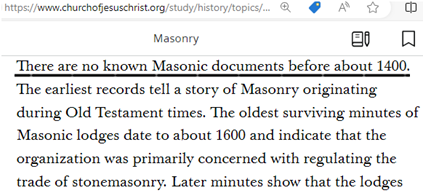
      Deciphering the Mormon Code: A Translation of LDS Soteriology into Plain English

      If you’re a Christian who has ever witnessed to Mormons, chances are you’ve walked away from more than one encounter feeling confused. They probably agreed with you that salvation comes through faith and nodded their heads as you explained grace to them. You may have wondered if perhaps they were more Christian than you realized or alternatively, if they were lying through their teeth.

      It may surprise you to learn that Mormons are not lying when they make these claims. The problem is that Latter-day Saints and Christians use the same words, but speak different languages. Words like faith, salvation, grace, and heaven all have different meanings assigned to them by our respective faiths. As a result, it can be extremely difficult to get our message across to Mormons because they won’t see the difference in our doctrines and when we insist they believe falsehoods, it makes them put up walls.

      That’s where I come in. I was LDS for 32 years, and my favorite people to debate were Evangelical Christians. In 2015 I decided to study grace in the Bible so I could be a more effective weapon. What I found tore my world apart and a year later I accepted Jesus as my Lord and Savior.

      The point is, I’ve been in both faith groups. I’ve had dialogues with both sides, from both sides, and I thought it would be prudent to translate Mormon beliefs into English.

      Be forewarned that not every Latter-day Saint will agree with my translation. There is no official dictionary of LDS terms, and some of them disagree over finer points of doctrine and how they should be defined. However, this should serve as a guide to understand how the majority of Latter-day Saints understand soteriology.

      The first thing you need to understand is Mormons believe in three heavens, and in different requirements to achieve each one. Because of that, they have reinvented common Christian terms to compensate for their worldview.

      Latter-day Saints believe we are literally children of God the Father, and therefore, the same species. Because of this, they see people as essentially good and undeserving of hell. While hell is preached in their churches, it is considered a temporary punishment where the wicked pay for their sins before entering some level of heaven.

      The lowest heaven is the Telestial Kingdom. People in this tier will enjoy the presence of the Holy Ghost, but the Father and the Son will be absent. You don’t have to be good to go there. It is believed that Hitler, along with murderers, adulterers, liars, and thieves will live in this place.

      Doctrine and Covenants 76:88 says that these Telestialites will be “heirs of salvation.” I cannot stress enough that in Mormonism, someone can be saved and still not enter the presence of Jesus. It’s like being invited to a wedding, but you’re stuck in the foyer away from the Bridegroom. Mormons will also sometimes use saved to refer to the resurrection, since these individuals are saved from physical death. The resurrection is what Latter-day Saints are referring to when they say salvation is a free gift from God.

      The Terrestrial Kingdom is the second level of heaven. Those people will enjoy the presence of the Son, but not the Father. Good people who didn’t accept the Mormon gospel will go there, along with anyone who died without law. Of course, us poor, apostate Christians get lumped into this category, and are told in patronizing fashion that we’ll be totally content since we’ll get to live with Jesus.

      It should be noted that Mormons believe in a works-based righteousness. Instead of a vicarious atonement, where Jesus obeyed on our behalf, they believe in an enabling atonement where Jesus opened a path for them to establish their own righteousness. This is where the concept of a middle heaven comes into play. Not everyone is as wicked as Hitler or as righteous as Mother Teresa (who ironically only makes it to the Terrestrial Kingdom), so they believe God made a middle heaven so people wouldn’t be punished more severely or rewarded more lavishly than they deserved.

      Mormons lack a good understanding of James 2:10 which states that even one sin causes us to break the whole law. Nor do they understand the concept of reckoned righteousness, which makes us totally worthy in the eyes of God. The Bible doesn’t leave room for a middle ground. We are either damned or redeemed, in the Spirit or of the flesh, on Christ’s right hand or at His left.

      The highest level of Mormon heaven is the Celestial Kingdom. This kingdom is only available to children who died before the age of eight and individuals who were baptized into the LDS church. Although a Mormon might claim that non-members can enter this realm, they actually mean non-members who accept their gospel in the next life.

      The Celestial Kingdom is what a Latter-day Saint is typically referring to when they mention heaven, and the state of being experienced there is called “eternal life”.

      This is not to be confused with “exaltation”, where an obedient temple Mormon advances to godhood. Exaltation is viewed as a secondary function of the atonement. When we insist that their temple ordinances are necessary to enter the Father’s presence, Latter-day Saints write us off as ignorant. So mind the nuance!

      As a general rule: don’t use “salvation” when talking to Latter-day Saints as it generally refers to the lower heavens. Instead, use “eternal life” since it’s much closer to our use of the word saved. For example, you might ask, “What is essential for someone to have eternal life in the presence of the Father?” This should cause the Mormon to go straight into their Mormon-unique doctrines instead of beating around the bush.

      Faith and Grace

      Faith and grace also have different meanings in Mormonism. To a Latter-day Saint, faith is an action verb that includes works. They are often skeptical when we equate faith with belief because “the devils believe and tremble.” (James 2:19) They rightly conclude that faith is more than an intellectual acknowledgement but they go too far and equate faith with faithfulness.

      The fastest way to make a Latter-day Saint think you don’t understand them, is to tell them they believe they are saved by their works. It’s a bit more nuanced than that.

      Would you be surprised to learn that Mormons agree with Christians that we are totally saved by grace? The real difference in our soteriology is we adhere to salvation by grace through faith, but they believe in salvation by grace through baptism and faithfulness to their covenants. In other words, their works indirectly save them by making them worthy of grace.

      Mormons often refer to grace in an enabling sense. They believe God gives them grace to strengthen them so they can keep the commandments. The Book of Mormon teaches that “…the Lord giveth no commandments unto the children of men, save he shall prepare a way for them that they may accomplish the thing which he commandeth them.” (1 Nephi 3:7)

      Latter-day Saints do not believe the law exists to condemn, but to make us righteous. They balk at the idea that a loving Heavenly Father would give us commandments we can’t keep. That’s where Mormon repentance comes in. Christians view repentance as a change of mind, specifically related to accepting Christ and being born again.

      Latter-day Saints, however, view repentance as an ongoing endeavor, not for the sake of sanctification, but for regaining worth in God’s eyes. Every time they sin, they fall out of favor with God until they repent, which includes correcting any wrongs and overcoming the sin so they do not fall into its trap again.

      Doctrine and Covenants 82:7 has this to say about repentance:

      And now, verily I say unto you, I, the Lord, will not lay any sin to your charge; go your ways and sin no more; but unto that soul who sinneth shall the former sins return, saith the Lord your God.

      Repentance is viewed as an ongoing effort to stay on God’s good side. When a Mormon is baptized they make a covenant with God, which they view as a two-way promise. They promise to obey God’s commandments, to bear one another’s burdens, and to stand as witnesses of God. In return they believe God offers them eternal life.

      Traditionally, Mormonism tied eternal life to successfully keeping these covenants, but modern Mormons are content with trying to obey. They will often say they remain in God’s favor as long as they “stay on the covenant path.”

      After being baptized, Mormons receive the gift of the Holy Ghost by the laying on of hands. At that moment they are born again, become adopted as sons of Christ (this is in addition to naturally being children of the Father, which doesn’t really count for anything in their doctrine), and become heirs of Abraham.

      The gift of the Holy Ghost is not to be confused with the power of the Holy Ghost. The gift is the permanent indwelling of the Spirit (unless the Mormon sins, in which case the Spirit leaves until repentance is accomplished) while the power is the temporary influence of the Spirit.

      Are you confused yet? Not only are these terms foreign to a Christian understanding, but many of them have dual meanings. Mormon semantics are purposely vague. It is difficult to share the gospel with them, because as soon as they feel threatened they enter chameleon mode. They will use this Christian sounding language to throw us off their scent and lose us in their maze of nuanced beliefs. This is why it’s been said that pinning down Mormon doctrine is like nailing Jello to a wall.

      How to Reach Them

      So how do we witness effectively to Latter-day Saints, when their semantics are so confusing? The good news is, I’ve already written an article that translates our doctrine into “Mormonese”. I recommend reading or sharing it with your Mormon friends as a conversation starter. It should at least get you past the initial confusion and into more meaningful dialogue.

      Some Mormons can feel threatened when the differences in our beliefs are exposed, especially when they realize they can’t hide behind convoluted phrases. They might insist that they believe exactly what we do. In this circumstance there is one question you need to use to get them out of the chameleon zone:

      “Are you saying the church didn’t need to be restored?”

      No matter how much they want to be thought of as Christian, this question forces them to admit the unique aspects of their faith. No Mormon wants to be brought down to the level of a generic Christian.

      Aside from that, here are a few tips for talking to Latter-day Saints.

      1. Always ask them to define their terms, and make sure you define yours, especially during the initial conversation.
      2. Don’t assume what they believe based on statements from past Mormon leaders. Their current leaders and scriptural canon is much more reliable to them.
      3. Ask questions. Telling them their beliefs are wrong is less effective than asking challenging questions. These questions will keep them engaged and force them to think for themselves.
      4. Show them you love them. They need to know you care about them as people before they will ever listen to what you have to say.

      Finally, don’t rely on my definitions to win over Mormons. This article is meant to help Christians avoid being thrown off track by slippery Mormon wording. I can tell you as someone who’s first language is Mormonese, that knowing their tricks isn’t enough to convince them. Your tone and your heart for the Mormon is the greater factor. Ultimately, the Spirit will determine how well a conversation goes.

      Be aware that the LDS language barrier is a double-edged sword. It keeps them just as confused about Christianity as it keeps us about them. But they need the good news nonetheless and we can’t give up on them just because it’s hard.

      My prayer for anyone who is teaching Mormons is that they would be filled with patience and an overwhelming love. I pray that the love of God would be seen through my Christian brothers and sisters and that the Mormons would see grace for the incredible gift it is. I hope that many of them would have not only a zeal for God, but a correct knowledge of Him and His work. I pray that God would open their eyes, break the chains of false religion, and that many Latter-day Saints would be saved in the Kingdom of God.

      • By Michael Flournoy

      The Vicarious Atonement: The Protestant View Explained in LDS Terms

      • By Michael Flournoy

      If you’re a Latter-day Saint, chances are that at some point you’ve been on the receiving end of an Evangelical Christian trying to save your soul. They likely insisted that you rely on good works to make it to heaven and that you lack true saving faith. Then they proceeded to describe your beliefs in half a dozen ways that seemed totally foreign to you.

      That’s because Evangelicals and Latter-day Saints use the same words, but speak different languages. Words like grace, faith, heaven, and salvation are defined differently in these faiths. As a result, these groups tend to embrace stereotypes about each other instead of gaining true understanding.

      That’s where I come in. I’ve been a member of both faith communities and have engaged in dialogues with both sides. Because of that perspective, I felt it would be prudent to create a translation of Protestant beliefs into plain “Mormonese”.

      In 2015, I was entrenched in online debates against Evangelicals. They always fell back on one word to defend themselves: grace. It was the thing they claimed to have that Latter-day Saints didn’t. I decided to study the topic in depth so I could yank the foundation out from under them.

      I went in with two questions: when does grace kick in and how much of the work of salvation does it accomplish? What I discovered shook me to the core. It became my greatest nightmare and my greatest joy. I had discovered a pearl of great price. I then sold everything I owned to gain it. Strange as it may seem to you, my dear reader, part of that price was my reliance on the Church of Jesus Christ of Latter-day Saints. I came to Jesus with nothing to offer, naked, and humiliated. He put His robes on me and the relationship I have with Him now is far beyond anything I ever had before.

      So this is the part where I slander the church, and tell you you’re going to hell, right? Wrong! My only goal is to help you throw away stereotypes and truly understand what Protestants believe.

      As a Latter-day Saint, I believed in an enabling atonement. I thought there were ordinances and covenants I needed to make in order for the atonement to fully take effect. I thought that in some way, my obedience made Christ’s sacrifice more efficacious in my life and in determining what degree of heaven I’d be worthy to obtain.

      As an Evangelical, I now believe in a vicarious atonement. I believe that Christ’s entire life was a vicarious ordinance on our behalf. He kept every iota of God’s law, and through his sacrifice on the cross, he now freely offers his righteousness to us. That’s why He told John the Baptist that His baptism would fulfill all righteousness- because His acts of obedience were literally accredited/imputed to His disciples.

      I now see that we can receive the full benefit of the atonement simply by accepting it through faith. I should note that by “faith” I am NOT referring to an action verb that includes obedience. I am merely referring to a sincere trust in Jesus and his work on the cross. Of course, when this idea is brought up, Latter-day Saints assume that this “cheap grace” is nothing but a license to continue on in sin. Some have also argued that this stance makes God a liar, since He is proclaiming someone righteous who really is not.

      Objectively, the Evangelical position seems preposterous. How can we claim that God is holy but teach that He forgives sin without requiring anything in return? And what leads us to believe that sinners would turn from their wicked ways without fear of punishment as a motivation?

      Imagine that a hardened criminal was taken to court. All the evidence proved beyond a doubt that he was guilty but the judge decided to forgive him. Not only that, but the courts would turn a blind eye to any evil he did in the future. The judge’s pronouncement of innocence would be a legal fiction. It’s doubtful that the man would change his ways just because he was forgiven. If anything, he would become more brazen in his crimes since there would be no fear of consequences.

      Add to that the idea that Christ’s righteousness is imputed to sinners, and suddenly our hypothetical criminal is not only forgiven for his crimes but is given the key to the city! Where’s the justice in that? Where lies the motivation for the sinner to change? I will get to these questions soon, but before I do, allow me to show that the concept of imputed righteousness is taught in scripture.

      Let’s start in Romans 4:10. Paul asks a significant question: “when was Abraham justified? Was it before or after he was circumcised?” Paul answers that he was justified BEFORE obeying the law of circumcision.

      If I understand the LDS mindset, your knee-jerk reaction is to argue that circumcision is part of the law of Moses, and therefore the contents of Romans 4 have nothing to do with your faith. But let me remind you that in Abraham’s day, there was no law of Moses. Therefore, the Mosaic law cannot be the subject of this chapter. Rather, Paul is using circumcision to convey a wider question: does obedience justify us before a holy God? The answer is no. Abraham was justified before he did anything to obey God.

      In Romans 4:5, Paul drives in this point:

      And to him that worketh not, but believeth on him that justifieth the ungodly, his faith is counted for righteousness.

      Here, Paul makes three claims that refute the idea that faith is an action verb that includes works. First, he deconstructs faith down to its basic elements. Belief and an absence of work are described as the genetic makeup of faith. Second, faith is described as being the catalyst for one to become righteous. And third, he makes the shocking statement that God justifies the ungodly.

      Paul doesn’t only equate an absence of works to faith, he also attributes it to grace. In Romans 11:6 he states:

      “And if by grace, then it is no more of works: otherwise grace is no more grace.

      Just as oxygen becomes water with the addition of hydrogen, and drowns us instead of providing breath, so too are faith and grace changed with the addition of works. They are contaminated so they bring us death instead of life.

      But what about James chapter 2? Doesn’t it teach that faith without works is dead?

      Yes, it does, but that doesn’t mean faith and works are conjoined. The body and spirit work together to do amazing things, but even paired they remain autonomous entities. Otherwise the spirit could not depart from the body.

      So James is not saying faith doesn’t exist without works. Doing so would contradict Paul’s statement that justification precedes works. Rather, James is explaining that works are evidence that someone has faith. Think of a tree. Isn’t the presence of fruit proof that the tree is alive? And didn’t that tree have to be alive to produce that fruit in the first place? This is the relationship between faith and works in Protestant theology.

      Consider this, if God saved people as a direct result of their obedience, wouldn’t salvation, at least to some degree, be earned? This would nullify grace as a gift for the ungodly, and transform it into a wage for the good. It would set Paul and James up as adversaries. But if we make the necessary assumption that Paul and James agree on the gospel, we must conclude that the people James references did good works because they had already become righteous through the unmerited gift of grace. Take James 2:23 for example:

      And the scripture was fulfilled which saith, Abraham believed God, and it was imputed unto him for righteousness: and he was called the Friend of God.

      As a quick aside, the word imputed means accredited or counted. This scripture again points to belief as the catalyst for making someone righteous. In fact, the passage referenced here is Genesis 15:6, which occurred several years before the sacrifice of Isaac. This confirms that Abraham did not offer Isaac to gain favor with God, but because he was already righteous.

      This righteousness acts like insurance, protecting us when we sin and keeping us in God’s favor. To illustrate this point, Paul quotes King David in Romans 4:7-8.

      “Blessed are they whose iniquities are forgiven, and whose sins are covered. Blessed is the man to whom the Lord will not impute sin.”

      David is perhaps the greatest evidence of God’s mercy having nothing to do with our performance. Not only did he commit adultery, but he put the woman’s husband on the front lines of battle to die. When the prophet Nathan confronted him, David confessed his sin and Nathan replied:

      “The Lord also hath put away thy sin; thou shalt not die.” (2 Samuel 12:13)

      I’ve seen Latter-day Saints argue that Nathan was merely pardoning David from physical death. This flies in the face of the statement that God put away his sin. If God excused physical punishment but kept David’s sin in His back pocket for Judgment Day, that isn’t really putting away the sin, is it? Likewise, David would be misguided for praising God for forgiving lawless deeds, covering sin, and for not counting his sins against him.

      I know what you’re thinking. What about justice? Shouldn’t a holy God always mete out righteous judgment? How can He forgive heinous sins like David’s without some kind of recompense?

      This is the same assumption the Prodigal Son has in Luke 15 when he returns to his father asking to be hired on as a servant. He believes that because he sinned against his father, he is no longer worthy to be called his son. However, the father puts his ring and his robes on the Prodigal and announces a feast in honor of his return. He is brought back into the family without having to pay back a single coin of his father’s inheritance.

      But despite this extreme show of mercy, there is an element of truth in the Prodigal Son’s assumption. For justice to be satisfied, someone has to pay. If God merely looked the other way, He would not be good.

      This is where Jesus comes in. Romans 3:23-26 explains His role:

      For all have sinned, and come short of the glory of God; being justified freely by his grace through the redemption that is in Christ Jesus: whom God has set forth to be a propitiation through faith in his blood, to declare his righteousness for the remission of sins that are past, through the forbearance of God; to declare, I say, at this time his righteousness: that he might be just, and the justifier of him which believeth in Jesus.

      There is a lot to unpack in this passage, but basically the full wrath of God was poured out on Jesus. He willingly took our punishment so we wouldn’t have to. This does two things. First, it makes God just because He punishes every sin. And second, it allows us to be justified freely.

      But what does it mean to be justified freely? Simply put, it means we don’t have to do anything to escape God’s wrath, because there is no more wrath. His righteous anger for our sins has already been depleted on Christ. This is why Romans 8:1 says there is no condemnation for those who are in Jesus. The above passage in Romans 3 spells out clearly what enables us to benefit from the atonement. Verse 25 says this propitiation is received by faith. There is no mention of commandments or temple ordinances being required for salvation.

      Through faith alone we become the beneficiaries of God’s favor at Christ’s expense. And what a heavy cost it was. He was whipped, tortured, mocked, and killed. That doesn’t even account for taking our sins. There is nothing remotely cheap about this. In fact, I would argue that what cheapens the atonement is saying our actions make it function. If this is true then Jesus isn’t enough.

      So yes, Jesus paid a heavy price for salvation, but what’s to keep us from wasting that gift and living unrepentant lives, especially if we’re as ungodly as Paul says?

      Here’s the game changer. When we come to saving faith, we are filled with the Holy Ghost. This initiates rebirth into a new life where we are convicted of sin and given righteous desires.

      The groundwork for this rebirth is laid out in John 1:11-13:

      He came unto his own, and his own received him not. But as many as received him, to them gave he power to become the sons of God, even to them that believe on his name: which were born, not of blood, nor of the will of the flesh, nor of the will of man, but of God.

      Spiritual rebirth and adoption into the family of God occur simultaneously when we receive Jesus, thus the gift of the Holy Ghost is received by “[belief] in his name.”

      Romans 8:14-17 goes into specifics on when this spiritual rebirth takes effect:

      For as many as are led by the Spirit of God, they are the sons of God. For ye have not received the spirit of bondage again to fear; but ye have received the Spirit of adoption, whereby we cry, Abba, Father. The Spirit itself bears witness with our spirit, that we are the children of God: and if children, then heirs; heirs of God, and joint-heirs with Christ; if so be that we suffer with him, that we may be also glorified together.

      Paul indicates that we become sons of God when we are led by the Spirit, and that this status is what makes us worthy to be joint-heirs with Christ. This presents a dilemma for LDS doctrine because it admits that individuals are led by the Spirit prior to entering the baptismal font. If we become children of God and joint-heirs with Christ before baptism, then there are no eternal rewards to be gained through priesthood ordinances. In fact, there is no exclusive benefit to being LDS at all.

      A Tale of Two Gospels

      Your next question is likely: if the church is wrong about grace, what organization is better? And honestly, that is the wrong question. I’m not selling a particular church, I’m promoting Christ. If His grace is sufficient, then He is all we need. If we claim we need ordinances and commandments to be saved, we make His grace deficient.

      There are essentially two gospels that exist on earth. Every religion will fall into one of these categories. First, there is the gospel of amputation. This gospel teaches that we must amputate the sin from our lives to be worthy. Since this includes sins of omission, we must also do good things. In regards to the LDS church, the temple ordinances play a vital role in bringing us to the Father’s presence.

      In stark contrast stands the gospel of imputation. Instead of cutting off sin, we put on the righteousness of Christ. This righteousness drowns out our wickedness and immediately makes us worthy of the Father’s presence. What’s more, it occurs before we obey commandments or undergo a single ordinance. Since obedience doesn’t lead to salvation, sin can’t undo salvation. It’s not even in the equation.

      When two religions practice baptism, but claim they are fully saved by imputation of Christ’s righteousness at faith, they esteem each other as brothers in the faith. This is why many Protestant denominations can coexist, but the LDS Church can’t tolerate another organization appropriating their temples and performing their rites. If another religion does baptisms, those baptisms are considered illegitimate by the LDS church.

      Again, this is because The Church of Jesus Christ of Latter-day Saints ties the ordinances themselves to eternal life. Once a religion does this, they must claim exclusive rights to their rituals or else there would be no need for their faith. This is true not only of your religion, but of every belief system that practices the gospel of amputation.

      To demonstrate these two gospels, let’s look at a well known Book of Mormon analogy: the iron rod. Lehi has a dream in 1 Nephi 8, where he sees a rod of iron leading to the tree of life. Throngs of people hold tight to this rod as they make their way to the tree.

      This is a good representation of the gospel of amputation. The tree symbolizing the love of God lies at the end of the path and effort is required to get there. The journey is treacherous, and many fall into forbidden paths and are lost. Others wander into filthy waters and drown therein. Even after reaching the tree and partaking of the fruit, some are embarrassed by the mocking of onlookers in a great and spacious building. They discard the fruit and enter the building, which later collapses.

      The point is, there’s no assurance in the gospel of amputation. There’s no point in the journey where anyone can rest in the knowledge that their salvation is secure. Even after reaching the end of the journey and partaking of the love of God, they can be coaxed away.

      But what if I told you there’s another route to the tree?

      After wandering around in darkness for hours, Lehi prays for mercy and the darkness subsides. He finds himself in a spacious field near the tree. He simply walks up and eats the fruit. And he’s not the only one to forgo the rod. Nephi, Sam, and Sariah also approach the tree without using it. Of the four of them, none are lost to forbidden paths or drowned in the filthy waters, making this path far superior to the iron rod.

      Imputation teaches that Christ already did the hard work of obeying God’s word. He made it past the iron rod, planted the tree of life, and built an escalator to heaven. This is the path of mercy. Justice is satisfied that Christ walked the path, and now Jesus can take us straight to the tree. The tree isn’t the end of the path, it’s the beginning. Once we board the escalator through faith, we can rest assured that our salvation is secure in the blood of the Lamb. There’s no way to get off and wander into the swamps of damnation. Our future in heaven with the Father, Son, and Holy Spirit is an absolute certainty.

      When faced with this concept, it’s not uncommon to wonder what role obedience plays. Allow me to answer that with an analogy about marriage.

      In order to marry someone, all that’s required is acceptance. We show this acceptance with two words: “I do.” Contrary to what fairy tales teach, the story doesn’t end at marriage. It’s the beginning of the adventure. It’s a roller-coaster of highs and lows. It’s an opportunity to grow closer to your spouse and learn to trust each other. But even during the tumultuous drops, the marriage covenant remains intact.

      Nothing changes within us when we enter this relationship. There’s no immediate transformation of character shouting to the world that we’re married. A couple may wear rings as an outward sign of their devotion, but that isn’t what makes them married. What makes them married is simply a legal declaration that they are.

      Now let’s pretend the bride was $100,000 in debt on the day of the wedding but she married a billionaire. By virtue of taking her husband’s name, she is now a billionaire too! That’s how imputation works. We take Christ’s name upon us and acquire His righteousness. The difference is, His righteousness is infinite. So there’s nothing we can do to make up the difference or slide back into spiritual debt.

      In my analogy, the husband may teach his bride to be wiser with money, but that comes after the marriage. In the same way, God’s word is a standard to teach us morality, but our covenant relationship with Him predates our obedience.

      Let’s shift over to a parent/child analogy. Many Latter-day Saints have told me they give rules to their children to teach them discipline. They have explained that our loving Heavenly Father employs the same methods. I agree, but with a caveat. Disobedience doesn’t undo the relationship. Can you imagine kicking your kid out of the house because he didn’t clean his room? Or disowning him because he told a lie?

      Or is your love unconditional? Do you value your relationships with your children, even when they do things you’re ashamed of? If your child grew up and said they hated you and walked away, wouldn’t they still be a son or daughter in your eyes? I believe this resembles the relationship we have with God. When we sin, God doesn’t abandon us until we get our act together. If anything, He’s closer to us in these times, giving us the comfort and direction we desperately need.

      As Paul so eloquently preaches in Romans 5:20, “Moreover the law entered, that the offense might abound. But where sin abounded, grace did much more abound.”

      So to my LDS reader I ask, does the same God who forgave David of murder and adultery really take away salvation when we do less evil than that? Does the Jesus who died for us while we were yet sinners (Romans 5:8) abandon us because we’re still sinners?

      Jesus prayed for the very people who condemned him to death saying, “Father, forgive them; for they know not what they do.” (Luke 23:34) And I posit that it’s against Christ’s nature to turn around and disown His own children.

      But what about us? Can’t we turn our backs on Him? We can leave him, but He will move heaven and earth to bring us back to the fold. Ultimately, the question that needs to be asked is this: do we adopt God or does He adopt us? If God adopts us, what right do we have to nullify that? We can complain or act out in defiance, but nothing we do can sever our relationship with Him. Even if we walk down an escalator, the stairs still work to bring us up.

      Another disagreement Latter-day Saints have with Evangelicals is our tendency to say those who leave Christianity never believed in Jesus at all. But let me explain, using marriage as an example again.

      I was married to my first wife for nine years. At the end of it she informed me that she wanted to date other men. When I protested, she filed for divorce. I spent months in a state of agony, reliving our most cherished memories, and yet they meant nothing to her. She saw my sorrow and wasn’t fazed. Did she fall out of love? No. The simpler explanation is she never loved me at all. What she felt for me was actually infatuation. Many people have an infatuation with the idea of God, but as soon as being a disciple becomes inconvenient, they abandon their Christian ideals.

      My friends, do not be deceived. Someone like this could never have loved God, nor could they have experienced real charity. 1 Corinthians 13:7 tells us that charity bears all things, believes all things, hopes all things, and endures all things. If it doesn’t endure, then it isn’t charity.

      As a Latter-day Saint, you may say: people get divorced all the time. Doesn’t that prove someone can walk away from God’s covenant relationship? Can’t we reject His love?

      The question of divorce was posed to Jesus by the Pharisees and He replied, “For the hardness of your heart [Moses] wrote you this precept. But from the beginning of the creation God made them male and female. For this cause shall a man leave his father and mother, and cleave to his wife; and they twain shall be one flesh: so then they are no more twain, but one flesh. What therefore God hath joined together, let not man put asunder.” (Mark 10:5-9)

      In other words, divorce is not a God thing, but a man thing. And according to the New Testament, Christ is our bridegroom (Matthew 25:5). If we have been sealed to Him, how can we be separated? Consider the words of Paul in Romans 8:35-39:

      Who shall separate us from the love of Christ? Shall tribulation, or distress, or persecution, or famine, or nakedness, or peril, or sword?

      As it is written, For thy sake we are killed all the day long; we are accounted as sheep for the slaughter.

      Nay, in all these things we are more than conquerors through him that loved us.

      For I am persuaded, that neither death, nor life, nor angels, nor principalities, nor powers, nor things present, nor things to come,

      Nor height, nor depth, nor any other creature, shall be able to separate us from the love of God, which is in Christ Jesus our Lord.

      If you’re tired of fighting a losing battle to reach perfection, if broken covenants condemn you, if your sins have traded your peace with fear, and if a love that runs at the sight of your imperfections is what you’re used to, then I invite you to flee from it. You will never be enough in a gospel like that and you will never sufficiently prove your worthiness.

      Instead, I invite you to embrace the unconditional, unending, fully accepting, ever merciful, totally sufficient, and all encompassing love of Christ. It’s the only way out, because the gospel of amputation ultimately condemns us. Even The Book of Mormon states that God cannot save us in our sins (Alma 11:37) or look upon sin with the least degree of allowance (Alma 45:16). It goes on to teach that if we are not stripped of pride and envy, we are not prepared to meet God (Alma 5:28-29). James 2:10 states:

      For whosoever shall keep the whole law, and yet offend in one point, he is guilty of all.

      Take a moment and think about your spiritual situation. Have you repented of all your sins? If you were called up to Judgment Day at this very moment, can you say with certainty that you’d be worthy of the Father’s presence? Have you been overly harsh with your children? Have you been selfish? Have you experienced road rage? Is God going to be impressed if you show up to Judgment Day and your spiritual report card shows a grade of B+?

      According to James 2:10, that score of B+ isn’t even possible. If we have one red mark, our grade falls to an F. It is unacceptable to break one iota of God’s law, and His laws aren’t easy. In Matthew 5 Jesus says that if we look at a woman with lust, we’ve committed adultery in our hearts (Matthew 5:28), and if we call our brothers fools we’re in danger of hell fire (Matthew 5:22).

      Unfortunately, this is the boat all of humanity is in, myself included. 1 John 1:8 says that we deceive ourselves if we claim we have no sin. In other words, there is never a point in our journey where we can escape the condemnation we rightly deserve. This is why the message of the vicarious atonement is so important.

      Evangelicals used to tell me God gave the Israelites the Law of Moses to show them they couldn’t keep it. That statement is antithetical to everything Latter-day Saints believe. Why would a loving Heavenly Father give us commandments we couldn’t keep?

      To answer that question, let me point to a simple equation. 1+1=2. This equation has two parts, the problem and the solution. You can’t find the answer without the problem, and when it comes to salvation, the problem is the law. The more we try to amputate sin from our lives, the more aware we become of our enslavement to it.

      The New Testament teaches that the law was our schoolmaster to bring us to Christ (Galatians 3:24). As a Latter-day Saint, I thought that meant I became righteous by obeying God’s laws. However, the opposite is true. The law doesn’t make us righteous, it exists to condemn us. Galatians 3:21-24 says:

      Is the law then against the promises of God? God forbid: for if there had been a law given which could have given life, verily righteousness should have been by the law. But the scripture hath concluded all under sin, that the promise by faith of Jesus Christ might be given to them that believe. But before faith came, we were kept under the law, shut up unto the faith which should afterwards be revealed. Wherefore the law was our schoolmaster to bring us to Christ, that we might be justified by faith.

      This is a shocking revelation. Paul says that righteousness doesn’t come by keeping the law, in fact no law exists that can generate it. In verse 22 he says it’s because we’re sinners that we can receive faith. In other words, we have to be beaten down and pinned against the wall before we realize we can’t do it ourselves. Faith is realizing we have nothing to offer. We acknowledge we have received the due wages of our sin and only Jesus can bring us to life.

      In Colossians 2:13 Paul says we were dead in our sins. As a Latter-day Saint you are especially equipped to understand the implications of this because it coincides with your doctrine about temples. A vicarious ordinance can only be performed for a dead person. Once the ordinance is done, the dead person merely has to accept what was done on their behalf. This is called imputation. In other words, your act of righteousness (i.e. getting baptized, endowed, or sealed) is accredited to the dead as if they did it themselves.

      This is essentially what Jesus did for us. He lived a perfect life of obedience to the Father, and on the cross he traded His righteousness for our sin. This is why Romans 5:10 associates salvation not only with Christ’s death, but with His life. Since He was obedient, we are endowed with a perfect righteousness. It is as if we obeyed every commandment God ever gave.

      When Jesus spoke to the woman at the well he said, “Whosoever drinketh of this water shall thirst again: but whosoever drinketh of the water that I shall give him shall never thirst; but the water that I shall give him shall be in him a well of water springing up into everlasting life.” (John 4:13-14)

      If we’re trying to drink from the well of human righteousness, that well will run dry. However, Christ’s righteousness is infinite and never ceases to quench our parched souls. In Philippians 3:8-9 Paul says:

      Yea doubtless, and I count all things but loss for the excellency of the knowledge of Christ Jesus my Lord: for whom I have suffered the loss of all things, and do count them but dung, that I may win Christ, and be found in him, not having mine own righteousness, which is of the law, but that which is through the faith of Christ, the righteousness which is of God by faith.

      Here he claims that the righteousness he has is not his own, but that it comes from Christ. Furthermore, he obtained this righteousness through faith.

      Perhaps the greatest metaphor for imputation comes from 1 Nephi chapters 3 and 4. It tells a story of Nephi and his brothers going to Jerusalem to get a set of brass plates from a powerful man named Laban. Their initial attempts meet with failure because Laban is unwilling to part with his treasure. Nephi’s family comes back with their riches, intent on purchasing the plates. Laban takes their money, but drives them out of his presence. Just when things look hopeless, an angel appears saying Laban will be delivered into their hands. Nephi creeps into the city and finds Laban passed out drunk in the street. At the urging of the Spirit, Nephi takes Laban’s sword and decapitates him. He then puts on Laban’s clothing and equipment and makes his way to the treasury. Once he’s inside, he is mistaken for Laban and given the brass plates.

      In this metaphorical story, the brass plates represent salvation and Laban represents Christ. When they offer their riches to purchase the plates, they are driven off. Such will be the case if we try to offer God our obedience as a currency to enter heaven. But the story takes a surprising turn. Nephi slays Laban and puts on his clothes. This symbolizes putting on Christ’s righteousness. Suddenly we are no longer judged as imposters trying to break into heaven, but as if we were Christ Himself. The Book of Mormon calls this “putting on the robes of righteousness” (2 Nephi 9:14). Laban even has to die in order for this to take place. The parallels are really astounding.

      To recap, there are two gospels: the gospel of amputation that adheres to an enabling atonement, and the gospel of imputation that adheres to a vicarious atonement. The gospel of imputation puts the emphasis on Christ’s obedience and hangs salvation on His merits. It states that Jesus is sufficient. He effectively becomes our baptism, sealing, and endowment. He is our priesthood and our temple.

      So where does that leave The Church of Jesus Christ of Latter-day Saints? Like Paul said, there is no system that can generate righteousness, and that includes the ordinances of the restored gospel. However, if you embrace the vicarious atonement, it doesn’t mean you have to look back at the church with disdain. I don’t. Instead, I view the church as a schoolmaster that brought me to Christ. Being raised as a Latter-day Saint has equipped me to understand and appreciate grace in a way that I never could have if I’d been raised Protestant.

      However, the apostle Paul says that once faith is obtained, we are no longer under a schoolmaster (Galatians 3:25). If you take this view, then you are no longer bound by the laws and ordinances of your old gospel. But you will gain something much more glorious, total assurance of your salvation, and a trust in Jesus that you never thought possible.

      Thanks to the Vicarious Atonement your work has been done. The only question that remains is: will you accept it.