
In one of my other posts, called “How Did We Get The Book Of Mormon?” (https://jllds.org/2023/12/21/how-did-we-get-the-book-of-mormon-pt-1/), I mentioned a discussion that I had with one of my missionary friends. After I gave him my answer, he responded and said, “How then do you go about explaining the geographic specifications that are mentioned in the BOM? Did Joseph Smith just happen to get super lucky in getting all of those things correct when he was on the other side of the world and talking about things that happened 2000+ years ago?”
In any case, both the BOM and Bible can’t be proven to be 100% true by evidence, especially in regard to the miracles and specific details of the stories within. But in regard to the people and tribes mentioned, and also in regard to the cities that are mentioned, those things can be legitimately proven! To give us a baseline, let’s start with a few of the archeological discoveries related to the Bible:
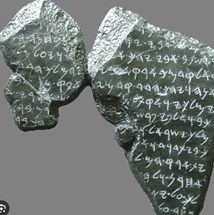
- The Tel Dan Stele: This ancient tablet dates back to roughly 800 BC. The phrase “house of David” is mentioned on it. This just goes to show that the Biblical writers weren’t fabricated this dynasty. The house of David that is referenced in the Old Testament is something that actually existed in history.
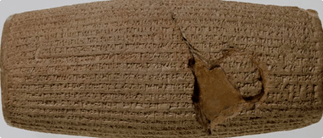
2. The Cyrus cylinder: King Cyrus of Persia wrote on this horizontal clay jar about how he allowed his slaves to return to home and rebuilt their sanctuaries for their gods. In Ezra chapter 1, we read about the same guy (king Cyrus) and it says that Cyrus allowed the Israelites to return to Jerusalem and rebuild their temple for Yahweh, the one true God. That’s external and secular archeology that directly supports a person, a place, a tribe and an event that is referenced in the Bible.

3. The Moabite Stone: This was written by the king of Moab. He writes about how the king of Israel oppressed them (the Moabites) for a long time. Then they eventually rebelled and conquered Israel. The Bible talks about this same event in 2 Kings 3:4-7. This is also important because here we have clear external evidence from an enemy of Israel which verifies that the nation of Israel and Moab were actual historical people groups in history and not just tribes that the Biblical writers fabricated.
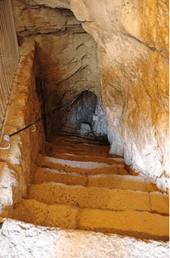
4. In 2 Kings 20:20, we read about King Hezekiah and how he built a tunnel for a better water source when he was king of Israel. That tunnel has been discovered, confirmed and excavated.

5. The pool of Siloam is mentioned in John 9:7 when Jesus healed the blind man. That has been discovered as well!
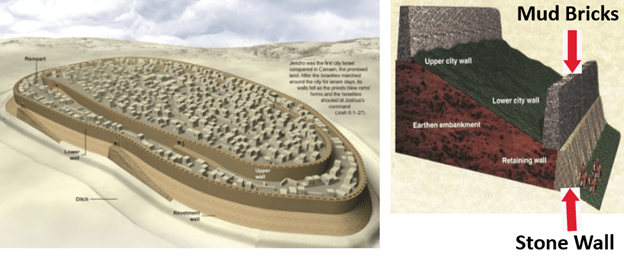
6. The picture above (left side) is what Jericho used to look like: a heavily fortified city that was surrounded by an impenetrable wall. In the right picture, you’ll notice that the wall is divided into two sections: bricks on top and stones on the bottom.

This is what Jericho looks like today. Both secular and Christian scholars agree that this is the geographic location of Jericho. As you can see in the pictures above, the bottom section of the wall is still standing thousands of years later! When archeologists first discovered this location, they dug at the base of the stone wall only to find the crumbled remains of the bricks that were once standing on top of the stones. Again, both secular and Christian scholars agree that there was an outside tribe that laid siege against Jericho which is undoubtably what caused those mighty walls to come tumbling down…just as the Bible describes.
7. Many of the cities that are mentioned in the Bible are still on maps today.
8. Rivers and seas mentioned in the Bible are still on maps today: Sea of Galilee, the Dead sea, Jordan river, Red Sea, .
9. We read in Genesis that the Garden of Eden was near the Tigris and Euphrates Rivers. Those rivers still exist to this day in Africa.
10. All scholars agree that the disciples of Jesus were real people and that Paul was a historical person. Most, if not all the places that Paul visited on his missionary journeys have been confirmed by all historians to be real places as well.
Now that we have some examples of what constitutes as legitimate geographic and archeological evidence, let’s pivot to the Book of Mormon and the archeological evidence that it has to offer. Dee Green and Thomas Ferguson were two of the earliest archeologists who worked for the department of archeology at BYU as faithful members of the LDS Church. After years of research, here is what Dee Green had to say on the matter:
“The first myth we need to eliminate is that Book of Mormon archaeology exists… If one is to study Book of Mormon archaeology, then one must have a corpus of data with which to deal. We do not… Biblical archaeology can be studied because we do know where Jerusalem and Jericho were and are, but we do not know where Zarahemla and Bountiful, nor any other location for that matter, were or are.” (A Journal of Mormon Thought, 1969. Pg 76-78)
Thomas Ferguson was also very dedicated to finding archeological evidence for the Book of Mormon. In the end, here is what he said:
“With all of these great efforts, it cannot be established factually that anyone has put his finger on a single point of terrain that was a Book-of-Mormon geographical place. And the hemisphere has been pretty well checked out by competent people. Thousands of sites have been excavated…Evidence of the foregoing animals has not appeared in any form — ceramic representations, bones or skeletal remains, mural art, sculptured art or any other form. The zero score presents a problem that will not go away with the ignoring of it. The absence of such evidence…is distressing and significant…I’m afraid that up to this point, I must agree with Dee Green, who has told us that to date there is no Book of Mormon geography. I, for one, would be happy if Dee were wrong.” (Written Symposium on Book-of-Mormon Geography, 1975, pg 4)
A year later, Fergeson proceeded with further details: “The real implication of the paper is that you can’t set Book of Mormon geography down anywhere–because it is fictional and will never meet the requirements of the dirt-archeology. I should say –what is in the ground will never conform to what is in the book.” (Letter to Mr. & Mrs. Lawrence, 1976)
A professor at BYU named Ray Matheny also stated:
“While some people choose to make claims for the Book of Mormon through archaeological evidences, to me they are made prematurely, and without sufficient knowledge…I would feel terribly embarrassed if anyone sent a copy of any book written on the subject (supporting archeology for the BOM) to the National Museum of Natural History – Smithsonian Institution, or other authority, making claims that cannot as yet be substantiated.…there are very severe problems in this field in trying to make correlations with the scriptures. Speculation, such as practiced so far by Mormon authors has not given church members credibility.” (Letter by Ray T. Matheny, dated Dec. 17, 1987)
Here are three faithful LDS members who have dedicated much of their live to discovering legitimate archeology for the Book of Mormon. But in their painful and honest admission, they both state that there is absolutely no archeological evidence that supports the existence of the people, cities, tribes and events listed therein. And these two men aren’t alone. This has happened to a number of Latter-Day Saints who set out on a sincere mission to prove the geography for the Book of Mormon. But then they end up realizing…there’s nothing. For many, it breaks their faith. Even current apologetic sources like Fair Latter Day Saint made this statement:

The Book of Mormon talks about the big battle between the Lamanites and the Nephites on the Hill Cumorah. The LDS Church has a visiting center today for the Hill Cumorah, which is located in Manchester, New York. (screenshot below)

There were allegedly millions of people who fought against each other during this last battle, yet no artifact, shield, sword, tablet, or verification of any kind has ever been discovered. But here is the kicker: we apparently “know” the general vicinity of where the battle of Hill Cumorah took place, right? The LDS Church confirmed this in the following letter:
“The Church has long maintained as attested to by references in the writings of general authorities, that the Hill Cumorah in western New York state is the same as referenced in the Book of Mormon (Ether 15:2).” (General Authority Michael Watson, 1990, Letter to Bishop Brooks)
If I was a Church leader, I would be searching every nook and cranny on that hill to prove to the world that the Book of Mormon is true. And guess what? This is exactly what the LDS Church did. After their search, they quietly released their findings:
“In accord with these general observations about New York and Pennsylvania, we come to our principal object—the Hill Cumorah. Archaeologically speaking, it is a clean hill. No artifacts, no walls, no trenches, no arrowheads. The area immediately surrounding the hill is similarly clean. Pre-Columbian people did not settle or build here. This is not the place of Mormon’s last stand. We must look elsewhere for that hill.” (BYU Publication – John E. Clark, “Archaeology and Cumorah Questions”, Journal of Book of Mormon Studies, Volume 13, Number 1, p.151 (July 31, 2004);
Much of this can be boiled down to this one critical thought:
Am I really supposed to believe that the same God inspired both of these books?
Is it wise for me to believe that God would really be that inconsistent and say, “My first book is going to have so much archeological evidence even atheists will be convinced of its validity and come to Christ (which there are many testimonies of)…while my 2nd book is going to have so little evidence that it’s going to cause many strong believers to lose their faith and walk away from my Church?”
I know that God isn’t asking us to know the answers to every single question in life, but he has given us a mind and he expects us to use it. One of the things I love most about Christianity is that it is the farthest thing from a blind faith. There are so many good reasons to trust the Bible to be a compilation of legitimate and historical documents with events that actually took place and people who actually lived! For evidence supporting that the Bible we have today is trustworthy and reliable, feel free to check my article: “Has The Bible Been Accurately Preserved Over Time.” https://jllds.org/2023/12/15/has-the-bible-been-accurately-preserved-over-time/
When it comes to these the Bible and the Book of Mormon, there is no competition for which one has more external and archeological support for his historicity and validity. Yet we see the Book of Mormon (1 Nephi 13:28) stating that many plain and precious truths have been removed from the book of the Lamb/Bible, implying that we can’t fully trust what it says because it has basically been tampered with and corrupted to an extent. Doesn’t it seem very much backwards that the book with little to no evidence is criticizing the book with overwhelming evidence?
I know it might sound ridiculous if you have been raised in the LDS Church your whole life…but if you are an LDS member, I want to invite you to entertain the idea and ponder this question:
If God was leading you out of the LDS Church, would you honestly be willing to follow him?
Please let me know your thoughts, things you appreciated or things that you disagreed with in the comment section below. Thank you for reading and God bless!
 JLLDS Ministries
One thought on “Geographic Evidence: The Bible vs The Book of Mormon”